Las Vegas, Route 66, Sedona, the Grand Canyon & Monument Valley in 8 nights
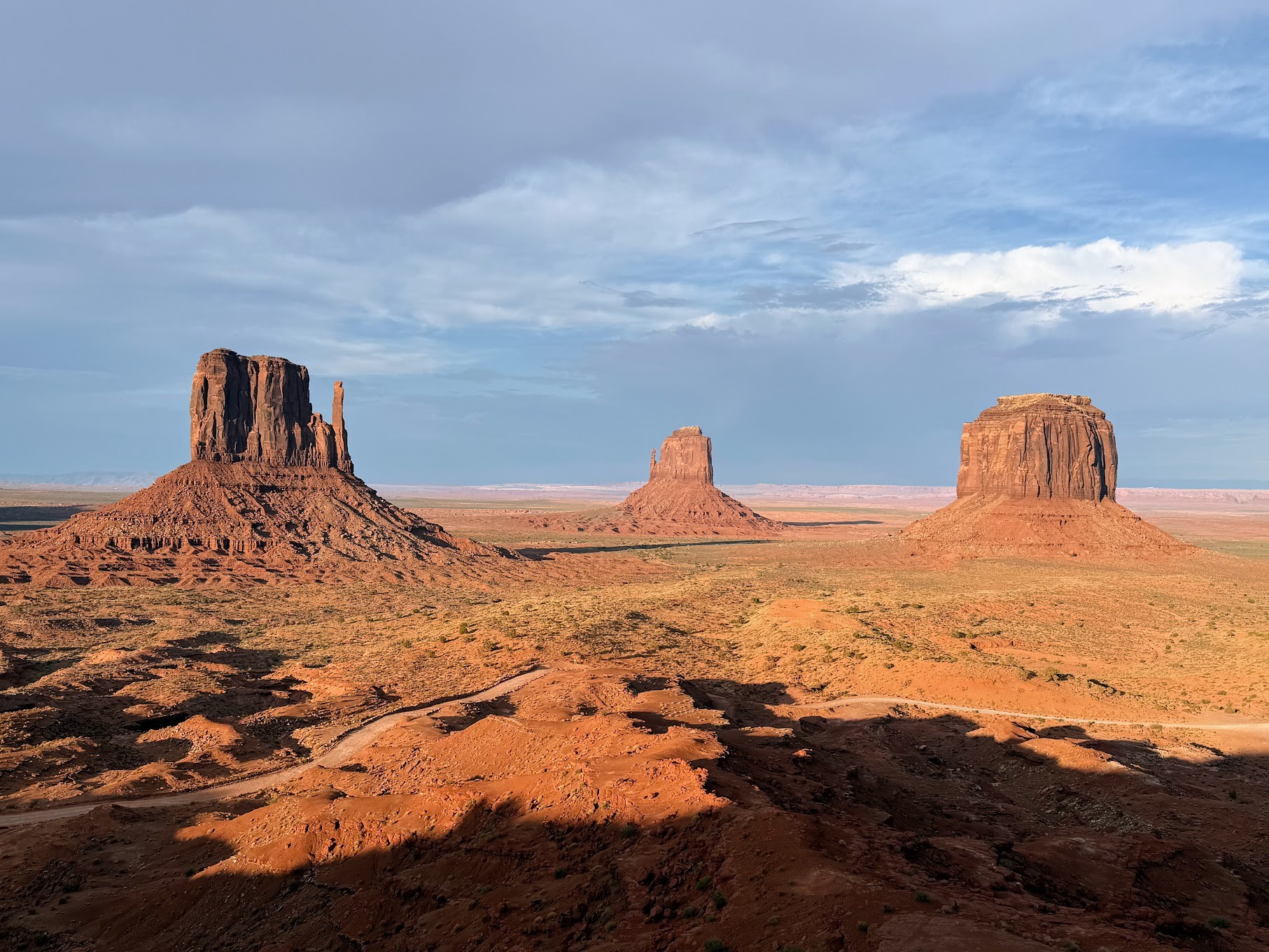
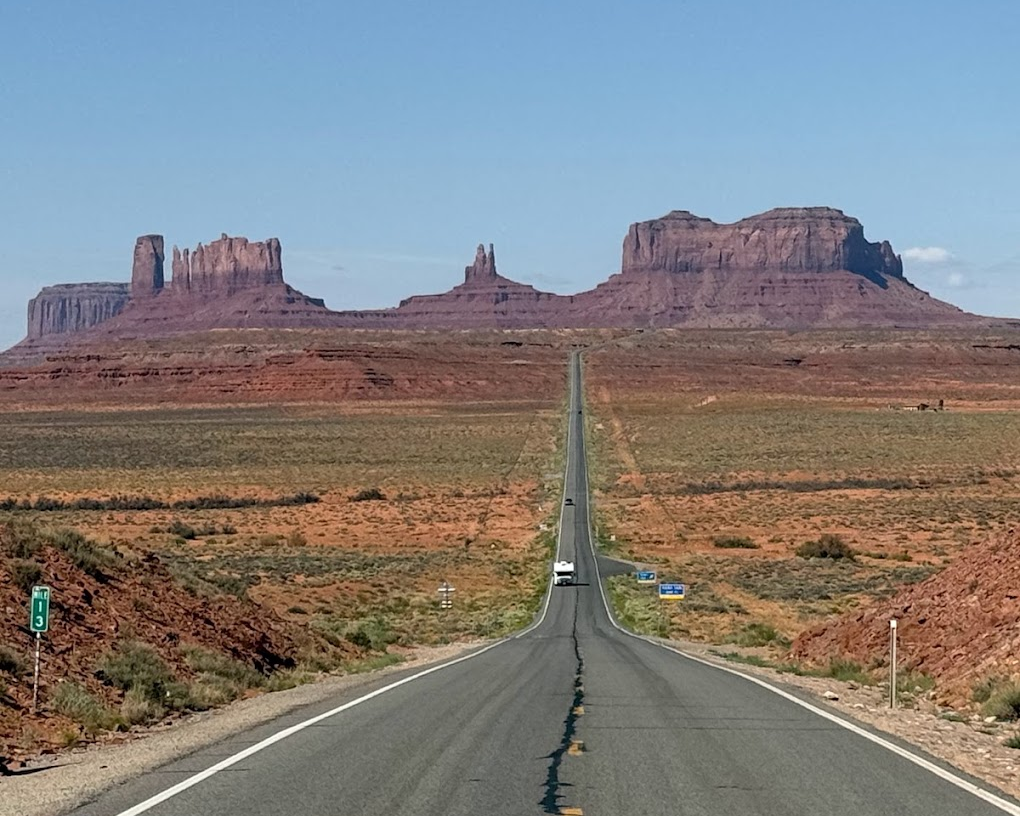
Monument Valley in the evening light, July 2026.
This post contains affiliate links. We may earn a small commission, at no extra cost to you.
In July 2026 we started our USA road trip with an 8-night loop out of Las Vegas: Hoover Dam, Route 66, Sedona, the Grand Canyon, Monument Valley and Horseshoe Bend, then back to Vegas. There were four of us, two adults and two teenagers. This is how we split the nights, how long each drive took, what we’d change, and whether 8 nights is enough.
The short answer: 8 nights was enough to see all of it, but not to linger. We had two hours at the Grand Canyon and one night at Monument Valley, and we’d do the loop again with one extra night.
Our loop at a glance
Nights: Las Vegas 3, Sedona 3, Monument Valley 1, Las Vegas 1
Order: Las Vegas, Hoover Dam, Route 66, Sedona, Grand Canyon South Rim, Monument Valley, Forrest Gump Point, Horseshoe Bend, Las Vegas
Who: two adults and two teenagers
Car: hire car collected from the Las Vegas airport rental car centre on the morning we left the city
Longest drives: Las Vegas to Sedona, and Monument Valley back to Las Vegas, both full days
When: July: dry heat in Vegas, monsoon storms in Arizona
Best moment: Monument Valley at sunset
Days 1 to 3: Las Vegas (3 nights)
It was our first visit to Las Vegas, and we stayed three nights at Mandalay Bay, towards the southern end of the Strip. The pool complex gave us some downtime, and the south end turned out not to be inconvenient at all.
We spent plenty of time simply exploring the Strip: the Bellagio fountains, the canals and painted sky of The Venetian, Paris Las Vegas and Luxor. Away from the casinos we did the Museum of Illusions, a retro arcade and the view from the top of the STRAT. July was hot, but it was a dry heat, which made it manageable.
Three nights gave us two full days plus the arrival evening, time to get over the flight before the driving started. More on Las Vegas and Mandalay Bay in Our USA Road Trip 2026.
Day 4: Las Vegas to Sedona via Hoover Dam and Route 66
Hoover Dam. Photo: Bureau of Reclamation
Drive: about 5 to 6 hours of driving and roughly 300 miles. With the stops, it took all day. We collected the car at the airport rental car centre, stopped at Hoover Dam and Kingman, and reached Sedona just before 8pm.
Route: Las Vegas, Hoover Dam, Kingman, Historic Route 66 through Hackberry to Seligman, Flagstaff, then down Oak Creek Canyon to Sedona.
Hoover Dam is one of those places where the scale is hard to appreciate until you’re standing there. We didn’t need hours there; it worked as the first stop out of Vegas.
At Kingman we joined Historic Route 66: a classic diner, an old Santa Fe steam locomotive in the park and the Route 66 sign. Further on we stopped at the Hackberry General Store, one of the old roadside stops on this stretch that helped inspire the world of Cars.
July is monsoon season in Arizona and we encountered some impressive storms around Seligman. Near Flagstaff the land turned greener and more alpine, and it was dropping dark as we drove from Flagstaff to Sedona. Even in fading light, the drive down through the red-rock canyon was one of the best approaches of the trip.
Don’t treat this as a transfer day: Hoover Dam and Route 66 are half the point. Leave Las Vegas early enough to reach Oak Creek Canyon in daylight, which we didn’t quite manage. More on the Cars connection in Is Radiator Springs Real?.
Days 5 and 6: Sedona (3 nights)
We stayed three nights at Amara Resort & Spa, by Oak Creek and within walking distance of Sedona’s bars and restaurants. Drinks at the infinity pool, looking across the creek to the red rocks, became our evening routine.
On our first full day we swam in the creek at Slide Rock State Park, which was wonderfully refreshing in the July heat, then went up to the Chapel of the Holy Cross for the view towards Cathedral Rock, and on to Airport Mesa for the views across the town. On the second we walked in Red Rock State Park.
Two full days covered the main viewpoints and time in the water. More in 3 Nights in Sedona.
Day 7: Sedona to Monument Valley via the Grand Canyon
Drive: about 2 hours from Sedona to the South Rim, then about 3 hours (160 to 180 miles) from the eastern viewpoints to Monument Valley. We left Moran Point just before 3pm and crossed into Utah just before 6pm Arizona time.
Route: Sedona, Flagstaff, Grand Canyon South Rim (Mather Point, then east along Desert View Drive to Grandview and Moran Points), out through Cameron and Kayenta to Monument Valley.
We left Sedona after breakfast and were at the rim by lunchtime. We stopped at several viewpoints, had a sandwich and spent about two hours there in all.
That was enough for a first look, not to explore. The hard part of this day is the timing: for sunset at Monument Valley in July, leave the last viewpoint by about 3pm. Our full account is in Is Two Hours at the Grand Canyon Enough?.
Night 7: Monument Valley (1 night)
We reached Monument Valley around 7pm local time, as the evening light caught the buttes.
We stayed at The View Hotel, inside the tribal park, for the location: the rooms look straight out at the Mittens. Cloud meant no clear night sky, but the morning views were beautiful. We didn’t drive the 17-mile Valley Drive; with one night, we were happy with the views from the hotel and the road.
Day 8: Monument Valley to Las Vegas via Forrest Gump Point and Horseshoe Bend
Drive: Google Maps puts Monument Valley to Las Vegas on our route at 397 miles and about 6 hours 20 minutes, before any stops. We left around 9:30, were at Forrest Gump Point by 10, Horseshoe Bend in the early afternoon and back on the Strip by about 9pm.
Route: north on US-163 to Forrest Gump Point and back, then Kayenta, Page and Horseshoe Bend, Kanab, Colorado City and St George, and the I-15 into Las Vegas. This road passes south of Zion.
Forrest Gump Point is north of the park entrance, so if you’re heading for Page it’s a there-and-back of about 20 minutes each way, near mile marker 13 on US-163. We’d still do it. As Cars fans, driving this road with “Life Is a Highway” playing felt particularly fitting.
Horseshoe Bend made a natural break before the long drive back. We didn’t need to build the day around it.
Only our phones noticed, but it’s worth knowing: the Navajo Nation keeps summer time and the rest of Arizona doesn’t, so the clocks go back an hour between Monument Valley and Page. If you book a timed tour in Page, check which time it’s in.
Night 8: Las Vegas again (1 night)
For the last night we chose Virgin Hotels Las Vegas, smaller and more modern than Mandalay Bay, so the second stay didn’t feel like a repeat. We wished we’d had another night there. The next morning we flew on to Reno for Lake Tahoe.
Is 8 nights enough for Las Vegas, the Grand Canyon and Monument Valley?
For us, yes, if you accept some short stops: two long driving days and one tight one. What it doesn’t give you is time to explore the Grand Canyon properly.
Only 7 nights? Drop one of the first Las Vegas nights.
9 or 10 nights? Add a night near Zion on the way back, which splits the longest day.
Who the pace suits: families with teenagers, and anyone who enjoys the drive as part of the day. Who it doesn’t suit: families with small kids and people who hate long drives.
What it costs to get in (2026)
Grand Canyon: $35 per private vehicle for seven days, card only. Non-US residents aged 16 and over also pay $100 each, unless they have the $250 non-resident America the Beautiful pass. Monument Valley is a Navajo Nation tribal park, so national park passes don’t cover it: entry is $10 per person. Horseshoe Bend parking is $10 per car, paid to the City of Page, and passes don’t cover that either. Fees change, so check before you go.
Affiliate links: if you book through one of these links, we may receive a commission at no extra cost to you.
Would we do the loop the same way again?
Yes: same order, same hotels, plus that night near Zion.
Want our full plan?
These 8 nights were the first part of our 18-night trip. All that planning took us about a week of evenings, 30 to 40 hours. Our 36-page USA Road Trip Pack puts it all in one place: every base and how many nights, which legs we drove and which we flew, what to book first, where we ate and a printable checklist. £14.99 launch price until 31 January (usually £19.99).
Not ready to book yet?
Leave your email and we’ll send you two free sample pages from our 18-night USA Road Trip Pack, plus the odd email about our trips and the pack. No spam, and you can unsubscribe at any time.
You’ll get a confirmation email from WordPress.com first. Click it and your pages arrive. How we use your email: Privacy page.
Beautiful Rivers, Town & Villages in Provence from a Lourmarin base
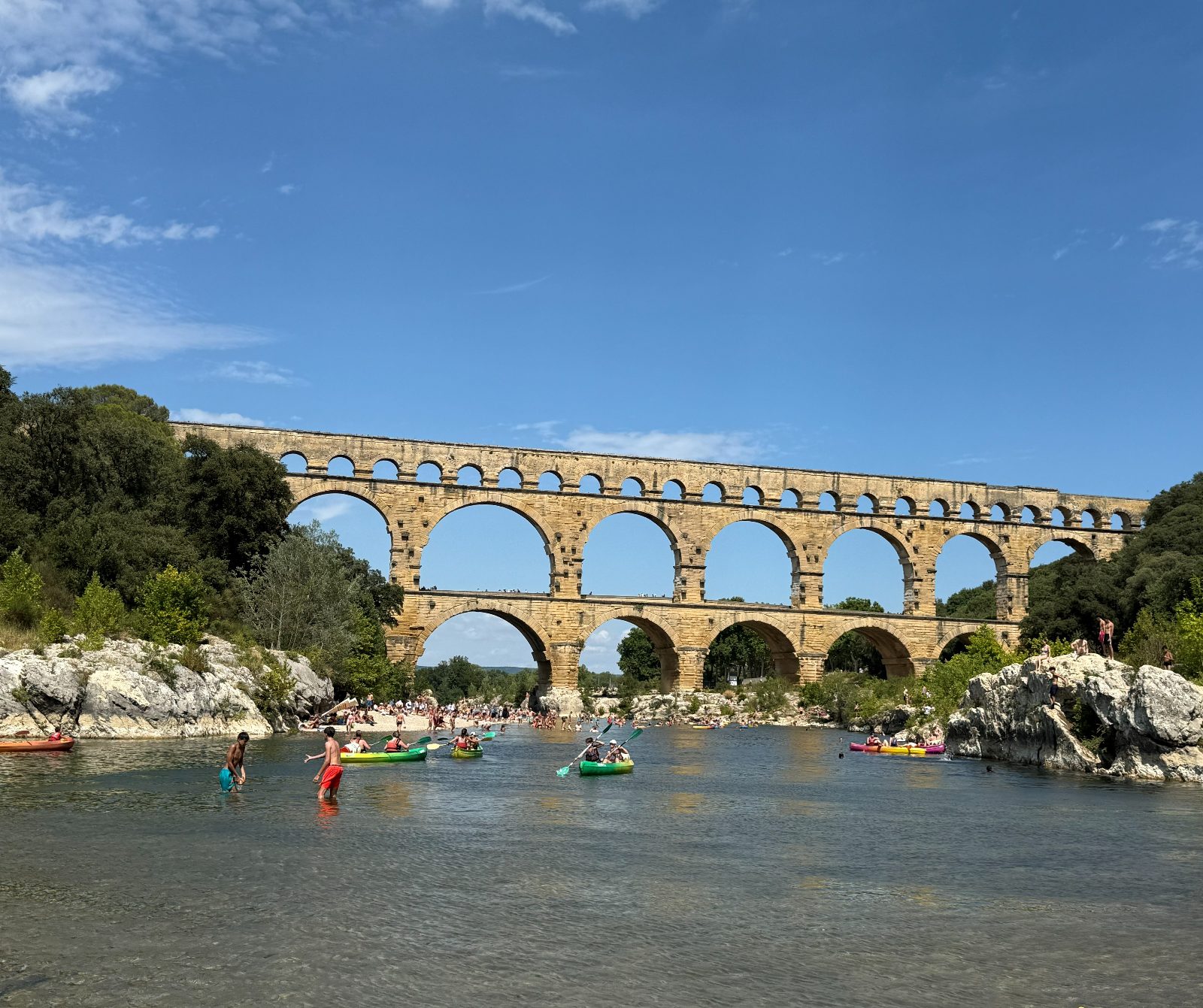
Canoes below the Pont du Gard, July 2025.
This post contains affiliate links. We may earn a small commission, at no extra cost to you.
In July 2025 we spent a week in Provence with our two teenagers, based at a campsite just outside Lourmarin in the Luberon. Seven nights turned out to be a good length. Below is our week day by day, with what the teens thought and what we’d do differently.
We’d enjoyed staying on this kind of campsite in Annecy and enjoyed having our own space and being able to sit and cook outside. So we sought somewhere similar in a location that would let us explore Provence. The trigger for the trip was that we fancied a campsite holiday in France again, so we decided on a region and looked for a base in that region. We wanted a pool and facilities for the kids, pretty surroundings, and to be able to walk out to a local town or village with things to do.
Our week at a glance
Base
Campasun Les Hautes Prairies, Lourmarin, in a Chalet Luberon 4 Jacuzzi
When
Late July 2025, seven nights
Who
Two adults and two teenagers
Getting there
Flew to Marseille and hired a car at the airport, about an hour’s drive from Lourmarin
The beach and the Pont du Gard, each 75 to 90 minutes each way
Best days
The two river days, too close to call
What we’d skip
Nothing
Is Lourmarin a good base for Provence?
Lourmarin’s Protestant temple, with the village and château behind
Yes. It sits in the middle of the Luberon, so most of what we wanted to see was a day trip away.
It was a very good hub giving us a good reach.
Lourmarin was great for a late-afternoon wander: slow paced, with a typical French atmosphere. The walk to the village from the campsite was about 10 minutes down the hill. We’d walk in for a few hours in the late afternoon or early evening, then head back to the site, where most nights we ate at the poolside restaurant or cooked fresh food on the plancha. We did eat out in Lourmarin a couple of times, and there’s a good choice of restaurants, ranging from simple and relaxed to more sophisticated. There are lots of interesting places to pop into too, from cafés and wine bars to a fabulous pottery shop that sold some really nice bespoke stuff.
What surprised us most was how much we liked Lourmarin itself. Along with the rivers, it was the part of the week that beat our expectations.
Day 1: Arriving in Lourmarin
Our lane at the campsite, a 10-minute walk from the village
We flew to Marseille and picked up a hire car at the airport. The drive up was easy.
First impressions were that this is picture-postcard France.
Day 2: Fontaine-de-Vaucluse and canoeing the Sorgue
The Sorgue near its source, the Kayak Vert canoes, and an old mill on the river
Our first day out was to Fontaine-de-Vaucluse, about 50 minutes from Lourmarin, where the Sorgue rises from a deep green pool under the cliffs. From there we canoed downriver with Kayak Vert.
This was my personal highlight. I love being on/by the water and canoeing twice down the Sorgue and the Gardon, two beautiful rivers, was just the best way to spend hot sunny days.
It took us two to three hours on the water, I’d say. We didn’t rush.
The teenagers loved the chutes, the small weirs you slide down in the canoe along the way. Kayak Vert runs the Sorgue trip from mid-May to the end of September. In July 2026 it costs €29 for adults and €15 for under-14s (Kayak Vert’s site, checked November 2026).
Day 3: A beach day on the Côte Bleue
Plage du Verdon at La Couronne, near Martigues
We fancied a beach day to break things up. I did some research which indicated Plage du Verdon, at La Couronne near Martigues, was a nice accessible beach with good parking and facilities. It probably took 90 minutes or so to get there. It was an interesting drive during the less urban parts. We wouldn’t have wanted to drive that far every day, but we’d heard the coast was pretty. There’s plenty to do in the region, so if people don’t fancy the drive then fair enough.
Google Maps puts it at about an hour and a quarter in light traffic. The beach is free, but you pay to park.
Day 4: Avignon
Avignon’s Hôtel de Ville, the Palais des Papes and the Pont d’Avignon
I’d always wanted to visit Avignon. The place drips with centuries of history, intrigue and life.
In Avignon we just had a mosey round. We had a drink in the square, looked at the palace, went to a few shops (one sold good smelly soap that the Missus loved), grabbed a bit of lunch and then looked at the bridge.
Avignon is about an hour from Lourmarin by the motorway (there are tolls), or an hour and a quarter on the D900.
Day 5: Gordes, then an evening in Lourmarin
Gordes: the view over the Luberon, the château, the plane-tree square and a lane down from the village
Gordes and the other hilltop villages were charming places: picture-postcard France, with the views, blue skies and bustling old streets in a classic French style. It was busy, but that’s to be expected. I wouldn’t let it put anyone off going. We only stayed in Gordes for a couple of hours.
Gordes is often called the prettiest village in the Luberon, and having seen it we can see why, though we didn’t get to all the contenders. Lourmarin is a different kind of pretty: a classic French village with its square, winding streets and château.
Both are on the official list of Les Plus Beaux Villages de France. Gordes is about 45 minutes from Lourmarin.
Some of the roads, particularly driving through the villages, can be tight if there’s someone coming the other way. It is annoying, but you can still get around. Again, it’s not a reason not to drive to or through these places unless you’re a nervous or impatient driver.
Back in Lourmarin we spent the evening in the village, including a drink at Le Tonneau, a small wine bar and épicerie. (Hours vary by season, so check before you go.)
Day 6: A rest day: the château, the market and the pool
The Château de Lourmarin: across the meadow, the tower with the Provence flag, the water garden and the ivy arch
We did decide to have a lower driving rest day which was nice.
We stayed in Lourmarin, went to the Friday market (every Friday morning, 8am to 1pm) and visited the Château de Lourmarin.
It was a busy, varied market with plenty of stalls and customers. Worth a mosey round for an hour.
Another classic French setting. The château against the backdrop of the town was stunning. The château had many historical items and lots of explanation of its history. The kids were interested. We were only there a couple of hours max.
The château is open every day of the year apart from mid-January, Christmas Day and New Year’s Day. In 2026 adult tickets cost €8 (checked November 2026).
That evening was a barbecue at the campsite.
The campsite pool as the sun went downRest-day barbecue on the plancha
Day 7: Canoeing under the Pont du Gard
The Pont du Gard from the river beach, and the Gardon upstream
Can you canoe and swim under the Pont du Gard?
Yes. We canoed down the Gardon with Kayak Vert from Collias, about 8 km, and stopped to swim below the bridge on the way. A shuttle brings you back to the base at Collias. Collias is about an hour and a half from Lourmarin.
Brilliant. A big highlight. We all loved it. The rivers are stunning.
Walking onto the bridge is free, and parking at the Pont du Gard site costs €9 per car. Swimming is at your own risk and there are no lockers (Pont du Gard official site, checked November 2026). The 8 km Kayak Vert trip from Collias costs €27 for adults and €14 for children aged 6 to 13 in 2026, including the shuttle back (Kayak Vert’s site, checked November 2026).
Where we stayed: Campasun Les Hautes Prairies
The pool and clubhouse at Campasun Les Hautes Prairies
Campasun Les Hautes Prairies is a four-star campsite on the edge of Lourmarin, with a water park, slides, a heated pool and a restaurant and bar. It opens from April to early October (2026 dates). We had a Chalet Luberon 4 Jacuzzi, a chalet for four with a covered terrace and its own hot tub, and we’d choose the same again. For four of us in peak July, the chalet felt good value next to a hotel.
Bed linen, towels and end-of-stay cleaning are paid extras, so ask for them when you book. Some chalets come with a plancha, and you can hire one at reception if yours doesn’t. There’s a €500 card deposit on arrival. Barbecues with an open flame aren’t allowed anywhere on the site, but planchas are fine and there’s a shared barbecue area.
Apart from a couple of days, we tended to arrive at the pool once we’d returned from our travels, so although it was busy, sunbeds were easy to get. At peak times it was pretty crowded, but we did manage to get some.
There was a buzz near the restaurant and bar but it was quiet near the accommodation. There were pretty clear skies at the site: we could see the Milky Way. There was loads of room on open ground for the kids to play football and so on.
The campsite team were very friendly and helpful but some did have limited English (albeit a lot better than my French!). I do speak enough French though to get by and this helped enormously. That’s not to say that if you don’t speak any French you’ll struggle but my wife was pleased I speak French – let’s put it that way!
There was a mix of nationalities, and the site was just as the listing showed it. We booked months ahead and nothing was sold out.
Is a Provence campsite good with teenagers?
The campsite had families of all ages. But the site and the nature of it, along with the nature of our trips are better suited to teenagers.
Affiliate links: if you book through one of these links, we may receive a commission at no extra cost to you.
What we’d change
The only drawback of our trip was that it was a lot of driving to go to all the places we saw. We’ve no regrets because they were all great. We’d maybe add another lower-driving rest day if we went for a week again.
One thing I wish I’d known was that the lavender wouldn’t be out. We were tied to going during the school holidays, but in an ideal world we would have gone when the lavender was in full bloom.
In the Luberon the lavender usually starts to flower in mid-June and is at its best from late June into early July, with the harvest under way during July. Dates shift with the weather each year.
We could easily have stayed a few days longer. We’d have slowed down a bit, spent longer in the villages maybe and had long lunches. There are other places to visit too, like the Calanques near Marseille, the Gorges du Verdon to the east and other villages.
What if it rains?
We had great weather all week, so it’s hard to say from experience. The towns and villages we visited all had plenty of shops, cafés and restaurants to duck into, Avignon has plenty going on, and Marseille is within reach if you want lots of choice.
Who this week suits
This week suits families with teenagers who like being on the water as much as wandering villages. The weather was hot and settled, apart from one short, spectacular storm, eating out felt fairly priced, and paying for parking at the sights was fine.
It suits less well if you don’t enjoy driving, want a pure beach holiday, or have toddlers.
People who would prefer hotel facilities perhaps wouldn’t like the site, but they can always find other accommodation in Lourmarin.
Would we do it again?
Yes.
It’s a good base to just totally relax in Lourmarin, which is lovely, or to travel round the sights in the wider region like we did.
The nicest all-round resort we’ve found in the Canaries.
The seafront promenade at sunset, Costa Adeje.
This post contains affiliate links. We may earn a small commission, at no extra cost to you.
We’ve spent the February half term in Costa Adeje three years running, a week each time, in a different hotel each year. It’s the nicest all-round resort we’ve found in the Canaries. It fits the bill for some winter sun in the school half term.
Costa Adeje is modern, smart, clean and bustling. The scenery around it is surprisingly green, with the mountains in the distance covered in trees. It’s a pretty setting, with the blue sea, the white buildings and the scenery behind against the blue skies.
Our days were normally pool days. Playa del Duque is nearby, so it’s easy to walk down there for a while, and some days we’d wander along towards La Caleta. In the evening it’s drinks in the sun somewhere, then we eat out every night. There are loads of restaurants to choose from.
Costa Adeje has a bit of everything
Higher end dining: the El Mirador centre by Playa del Duque, with courtyards and grand buildings next to the path to La Caleta.
A lively night out: the upper deck of the Litoral centre above Playa Fañabé, with the Winchester, Restaurante Colonial, sport on TV, cocktails and live music.
A sunset drink: Altamira Chillout, on the walk to La Caleta.
A day trip: Loro Parque, about an hour’s drive away on the north coast.
Our three Februaries at a glance
Year
Hotel
Where it is
2023
GF Victoria
On the hill just inland of Playa del Duque
2024
Iberostar Selection Anthelia
On the seafront between Fañabé and Playa del Duque
2025
Vincci Selección La Plantación del Sur
On the hillside above Playa del Duque
We fly from the UK and hire a car. Tenerife South airport is about 20 km from Costa Adeje, roughly 20 to 25 minutes by car, and there are loads of options for getting there.
What February is really like
Blue skies and the mountains behind the resort
Low to mid 20s, normally sunny with a bit of a breeze, and a few light clouds. In the evening you might need a light jumper or a hoodie. We have had cooler days, but for every day it’s been cooler when we’ve been there, there have been five where it’s nice. If you research it, that shouldn’t be a surprise. The winds in the Canaries tend to come from the north-east, so the south-west coast tends to be best on all of the islands.
The sea can be a bit chilly, but it has never stopped us going in and staying in for a while. The best moment, every year, is walking round in your shorts and T-shirt with blue skies and the warm sun on your face after four months of the British winter.
It’s always nicely busy at February half term. The pools, hotels and resort are bustling, and you might not be able to choose from loads of sun-loungers. But we go to feel like it’s summer and to break the winter up, so we want it to feel happy and vibrant.
Where we stayed
Costa Adeje has lots of nice hotels. Each of the three we stayed in will get its own review.
2023: GF Victoria, on the hill just inland of Playa del Duque. It has loads for kids. The surf simulator is at the top side of the hotel, and there were basketball courts and ping pong. The poolside restaurant was very nice. A modern, smart hotel with great facilities and a good location. Read our full GF Victoria review.
GF Victoria, 2023
2024: Iberostar Selection Anthelia, on the seafront between Fañabé and Playa del Duque. A large, high-end hotel with a more traditional feel, huge pools and sea views.
Iberostar Selection Anthelia, 2024: the main pool and the seafront pool
2025: Vincci Selección La Plantación del Sur, on the hillside above Playa del Duque, with views over the coast from the room balcony. The more boutiquey of the three we’ve stayed in. It’s smaller than the others and quieter, in a nice hillside location with good views.
Vincci Selección La Plantación del Sur, 2025
You get sunbed hogging everywhere, unfortunately, but at the hotels we’ve stayed in you always get a place. The pools we used were all heated and fine to spend plenty of time in.
Which hotel is best for families?
I’d say Vincci is probably more aimed at couples and older travellers seeking peace and quiet than at families. The pool areas are more akin to a spa than somewhere kids can play freely. It does have a kids’ club, though. So for families, that narrows it down to the other two. I think the pools are probably bigger at the Anthelia, which might suit older kids who need more space. But I prefer the Victoria. It has great facilities for the kids, the most modern, upbeat feel of the three, a spectacular dining area, and it just feels cooler than the others. The Anthelia has more of a typical Canarian theme, which might suit some, but it felt a bit twee to me in places.
Affiliate links: if you book through one of these links, we may receive a commission at no extra cost to you.
Beaches, the coastal walk and sunsets
Playa del Duque, our nearest beach every year
Playa del Duque is a very nice beach, and the promenade from there to La Caleta is a very nice coastal walk with plenty of interest en route. There are always paragliders over the coast; we just watch. For sunsets there’s a bar on the way to La Caleta, Altamira Chillout, where we’ve ended up for a sunset drink every year.
The coastal path from the hill above itAltamira Chillout, our sunset bar every year
Eating out and nights out
The upper deck of the Litoral centre, above Playa Fañabé, is always busy and varied. It’s where you go for a lively night out, like a traditional weekend night out in Britain: bars, sport on TV, cocktails, live music and decent food, though not as high-end as the Duque area.
Where we ate and drank:
The El Mirador centre, by Playa del Duque: the place for a higher-end meal, with a handful of restaurants, outside courtyards and striking, grand buildings right next to the path to La Caleta. One night we ate in one of its courtyards, by the fire pits, at Acanto, a Spanish restaurant.
The Winchester, on the Litoral deck: a fun bar with music, TVs and sports, and a nice convivial atmosphere.
The Moon, on the Litoral deck: brasserie-standard food, and they do great steaks.
Restaurante Colonial, on the Litoral deck: a bustling British pub, and you can watch the football there.
Leonardo’s Restaurant & Lounge Bar: also worth a visit.
You get some businesses trying to entice you in, but nothing as pushy as you can get in other places.
For the kids
The Fañabé promenade has fun stuff for the kids, from trampolines and bouncy castles to the soft play at Fantasy Park. Ours loved them.
Shopping and the old town
Costa Adeje doesn’t really have an old town. The area near Duque has a more traditional hamlet, fishing-village feel, but most of it is pleasant, with a Mediterranean feel. Shopping at Plaza del Duque is good, with lots of good brands.
Days out: Siam Park, Loro Parque and Los Cristianos
Siam Park is definitely worth it. It’s great fun for all the family, and a very nice water park. The rides are a good mix of lazy river and adrenaline rides of varying types, there are loads to choose from, and there were no long queues.
Lost City, Siam Park’s area for younger children
We like zoos and wildlife parks wherever we go, and we’ve been to Loro Parque twice. It breaks up the week, and it’s an option if there’s a day with poorer weather. Loro Parque is in Puerto de la Cruz on the north coast, about 65 km and an hour to an hour and a half’s drive from Costa Adeje. It is a long drive from the south, but it’s a good trip out and worth it. We were there for five hours or so, a full day really, and just grabbed a burger on the way round. We’d definitely go back. It’s an interesting and picturesque place.
Siam Park or Loro Parque? They’re genuinely different types of experience, and some families will lean more towards wandering round looking at the wildlife than a more active day. We like both, which is why we often do both. But if I had to choose one for teenagers, I’d say Siam, because it involves less travelling for them to moan about and it’s pretty much a slam dunk for some raucous or gentle family fun. We compare the two in more detail in Siam Park or Loro Parque? Which to Pick With Teenagers.
The orca show at Loro Parque, 2023
One year we drove down to Los Cristianos for a day on the beach. The sea was warm and clear, and it was a pleasant day on the beach. There were lots of fish, and snorkelling lessons were underway. The car park was busy, but we got parked up.
Is Costa Adeje nice, and is it lively?
Yes, it’s lively, but it suits everyone apart from party seekers. It’s good for couples, families and older travellers. Lively here means busy promenades and bars until late, live music, and families out in the evening.
Looking down to the coast from La Plantación del Sur, 2025
It’s hilly in places, but that shouldn’t trouble most people. I understand it might not be perfect if you have mobility issues. There’s occasional building work, but it’s certainly not widespread. We’ve never really strayed into Playa de las Américas next door, but we’ve never felt the need to.
Would we go back for a fourth February?
Yes, definitely. We keep going back because it gives us what we want in February: plenty of choice, a nice resort and trips we can do. Would we do anything differently? Nothing really. We just learned where we were best going for certain types of experience, which is what we’ve set out in this post.
We fancied a change one year and tried Fuerteventura, but Tenerife would probably still win for us. Our GF Victoria review is up now, and the other two are coming soon.
Dubrovnik had the wow factor. Makarska suited us better overall though.
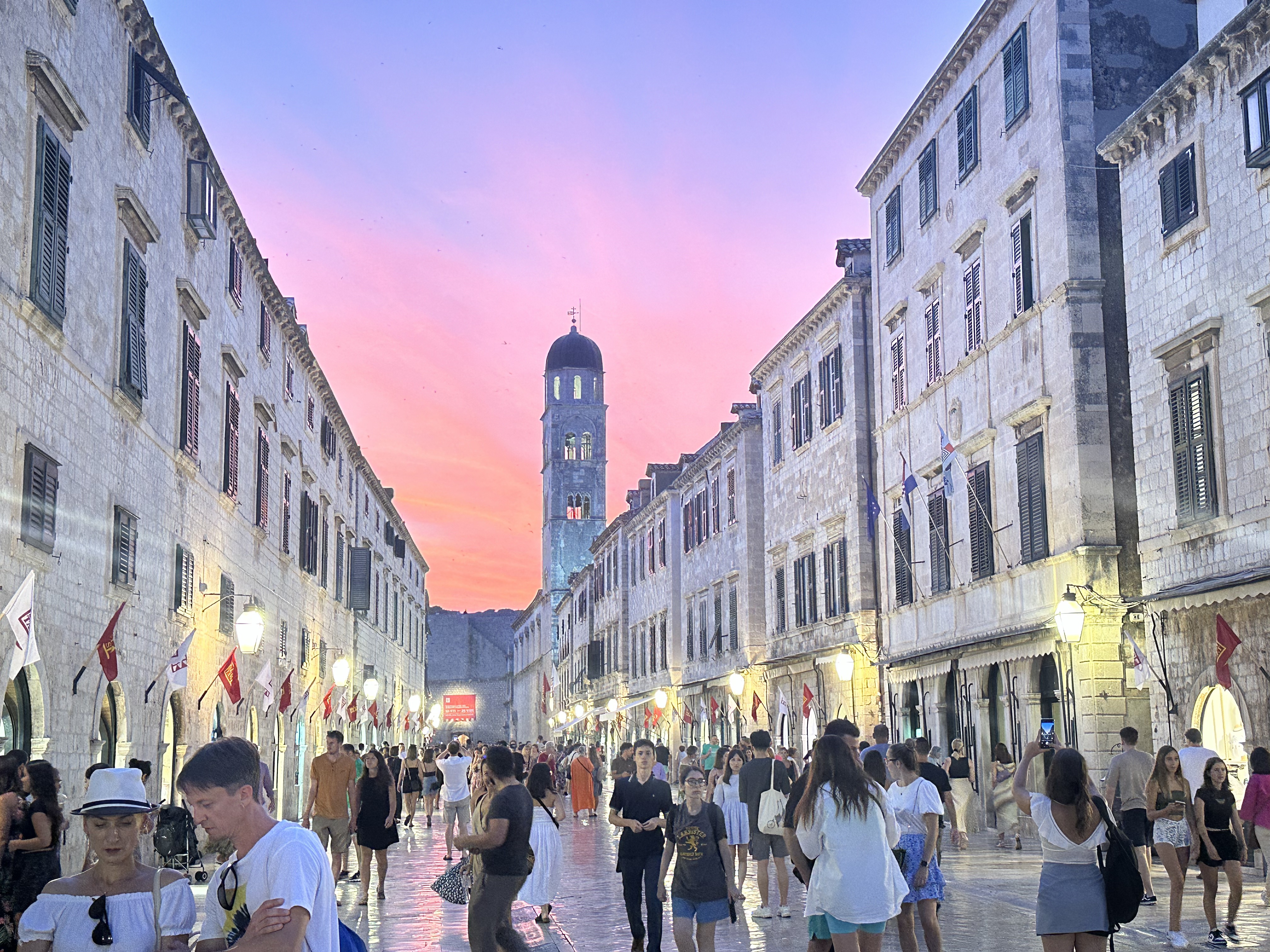
Dubrovnik Old Town at dusk
This post contains affiliate links. We may earn a small commission, at no extra cost to you.
We spent two consecutive summer holidays in Croatia: first seven nights at Sun Gardens Dubrovnik, around 20 minutes outside Dubrovnik, and then ten nights at the Aminess Khalani Hotel in Makarska the following summer.
They were both very good holidays, but they showed us two quite different versions of Croatia.
Our ideal Croatia combination
If we could combine the best bits, the answer would actually be fairly simple: Dubrovnik on the doorstep, but with the beaches, restaurants and seafront walkability we had in Makarska.
If we found that combination, we’d probably choose Dubrovnik.
Because Dubrovnik itself is stunning.
But the two holidays also helped shape our wider view of Croatia. It has a coastline that feels quite distinctive from much of the Mediterranean. The pebble beaches help give the water an extraordinary clarity and depth of colour, and at times Croatia feels almost like a fusion of Greece and Italy — something you notice in the architecture, the food and the general atmosphere.
If you’ve travelled around the Mediterranean a lot and occasionally feel that some of the mainstream resorts are beginning to merge into one another, Croatia is just a bit different. There is a touch of beauty, class and distinction to it that has made it one of our favourite places for a coastal holiday in Europe.
The Croatian coastline around Makarska — clear water, pebble beaches and pines.
Dubrovnik had the bigger wow factor
Dubrovnik Old Town was one of the highlights of either trip.
Its historic significance isn’t just tourist-board hyperbole: the Old City is a UNESCO World Heritage Site, with Gothic, Renaissance and Baroque buildings within its historic fabric.
What appealed to us, though, was the contrast within it.
The main streets can be polished, smart and busy, but wander up the steps and into the narrower streets and it changes. There are worn stone walls, tiny alleys, washing overhead and corners that feel much more lived-in.
Dubrovnik also had plenty of energy. The Old Town was bustling, with a huge choice of restaurants, cafés and bars packed into and around the streets. The frustration for us was being based away from all of that at Sun Gardens — once we were in Dubrovnik, there was no shortage of places to wander, eat, drink or simply soak up the atmosphere.
Restaurants and cafés in the atmospheric streets of Dubrovnik Old Town.
It manages to be impressive without feeling completely like a museum.
We only did part of the city walls rather than the full circuit, but even that was excellent. The rooftop and sea views are spectacular, although for us the busy, atmospheric streets inside the Old Town — restaurants, cafés, bars and all — were probably even more memorable than looking down on it.
That is something Makarska can’t quite match.
Makarska is very attractive. Dubrovnik feels special.
Our decision not to repeat exactly the same holiday the following summer wasn’t really because of Dubrovnik. It was more about how we like to spend a holiday.
Sun Gardens was excellent — but it depends what you want from a resort
Sun Gardens Dubrovnik — a superb coastal setting, but more self-contained than we prefer.
Sun Gardens Dubrovnik is an impressive resort.
The grounds were immaculate, the coastal setting superb and there was plenty to do. We particularly liked the sea: swimming, snorkelling and jumping into the water from the piers became a big part of the holiday, and we generally preferred that to spending all day around the pools.
There was also a good choice of restaurants on site.
So describing Sun Gardens simply as “too isolated” would be unfair.
Who Sun Gardens suits
For somebody who wants to arrive at a high-quality resort, relax by the pool or sea and not feel any particular need to go anywhere else, its location could actually be a strength. Plenty of travellers clearly like exactly that.
We’re just not really flop-and-drop holidaymakers.
We like going out, wandering around, trying different restaurants and seeing what is nearby. From Sun Gardens, doing that generally meant getting a taxi. It was easy enough, but there wasn’t a town or seafront immediately outside where we could simply decide to go for a walk after dinner.
That distinction matters. The resort wasn’t short of things to do or places to eat. We just like exploring beyond the resort as well.
And that became one of the things we deliberately looked for the following summer.
We did get out plenty while staying there. The Elafiti islands were one of our favourite days, visiting Lopud, Šipan and Koločep.
Suđurađ on Šipan — probably our prettiest stop on the Elafiti trip.
Šipan was probably the prettiest for us, particularly around Suđurađ, with exceptionally clear water and a small harbour setting that felt very Croatian.
Koločep felt a little more mainstream but was still attractive, while Lopud was probably the most unusual of the three, with its characterful waterfront and sandy beach.
Lopud — the most unconventional of the three islands we visited.
We also went to Zaton, which offered something completely different from Dubrovnik. It was a quiet place to wander, swim and have a drink, and we stayed for dinner at Konoba Kasar in Zaton Veliki.
That’s one I would mention to a friend. It sits right by the water and the setting was a big part of the appeal.
Suđurađ, Šipan — one of those scenes that sums up coastal Croatia for us.
Makarska gave us more on our doorstep
Aminess Khalani Hotel — our base for ten nights in Makarska.
That first holiday helped explain why Makarska suited us so well the following year.
We stayed at the Aminess Khalani Hotel, which gave us the sort of resort-style hotel we wanted while also letting us walk straight out into the surrounding area.
One of its biggest advantages was the seafront promenade.
From the hotel area you could follow the coast all the way towards Makarska town, passing beaches, restaurants, bars and cafés as you went. The centre is roughly a 20-minute coastal walk away, and the promenade itself became part of the holiday rather than simply a route from A to B.
Makarska’s coastline — with the town and promenade right on the doorstep.
That was a real draw for us.
You could spend the day around the hotel or beach, then later just walk out and see where you ended up. There was no need to make a plan every time we wanted a change of scenery.
Makarska itself felt lively, stylish and busy in quite a happy way.
The setting is superb. There is the Adriatic on one side and the mountains rising dramatically behind the town on the other, with pine-backed pebble beaches running along the coast.
It doesn’t feel like a generic beach resort.
The main drawback for us was peak-summer crowding.
Some of the most central beaches were extremely busy — genuinely packed rather than simply popular.
But having plenty within walking distance helped. Around Plaža Ramova and Cvitačka Beach, we found beaches that we preferred: more attractive, more varied and generally calmer.
Plaža Ramova — one of the quieter beaches we preferred near Makarska.
That choice became one of Makarska’s biggest strengths.
Brela, Jelsa and exploring beyond Makarska
We also really liked Brela.
It felt less built-up than Makarska and perhaps slightly prettier, with clear water, pale pebble beaches, pine trees and the mountains behind.
The snorkelling was particularly memorable. We saw shoals of fish very close to shore, and the water had the same extraordinary colour and clarity that we associate with this part of Croatia.
Brela is also home to Kamen Brela — the Rock of Brela, the small pine-covered rock just offshore that has become one of the town’s best-known symbols.
Kamen Brela — the Rock of Brela.
For us, Brela was somewhere we were very pleased to visit, although we’d probably still choose Makarska as the base for a longer stay because of the greater choice of restaurants and evening atmosphere.
We also did a three-island speedboat trip from Makarska, including a stop at Jelsa on Hvar.
Jelsa was one of the real highlights of the holiday and, genuinely, one of the prettiest places I’ve ever been.
It seemed to contain so much of what we had started to associate with Croatia in one small place: pale stone buildings, little squares and lanes, old churches, shuttered houses and a harbourfront full of boats.
Architecturally, it has that distinctive Dalmatian mixture of old stone buildings with Gothic, Renaissance and Baroque influences. Yet it doesn’t feel like somewhere preserved purely for visitors. It still feels like a proper little town.
Jelsa, Hvar — one of the prettiest places we’ve ever been.
We were only there as part of the boat trip, but it left a much bigger impression than the amount of time we spent there would suggest.
It is exactly the sort of place that reinforces why Croatia feels a little different from much of the Mediterranean.
Which would we choose?
The more we’ve thought about it, the less we see this as a simple Dubrovnik-versus-Makarska contest.
Our verdict
Dubrovnik is the more impressive destination.
If somebody who had never visited Croatia asked which of the two gave us the bigger wow factor, we’d say Dubrovnik.
Makarska gave us the holiday setup that suited us better.
We liked walking out of the hotel and immediately having beaches, restaurants, the promenade and the town available to us.
If your ideal holiday is an excellent resort where you can settle in and hardly leave, Sun Gardens’ relative seclusion might not bother you at all. It may even be part of the attraction.
We aren’t quite wired that way.
We like a good hotel, but we also like stepping outside it and seeing what’s going on.
So if we were choosing between the two holidays exactly as we experienced them, we’d probably lean towards Makarska for a longer family summer break.
But give us a hotel with Makarska’s beach choice and walkability, close to Dubrovnik, and we’d probably choose Dubrovnik.
Perhaps somewhere such as Cavtat might offer some of that combination, but we haven’t stayed there and wouldn’t pretend to know how it compares with Makarska for beaches, restaurants or atmosphere.
What we’re more certain about is Croatia itself.
After two summers there, we don’t think of it as simply another Mediterranean beach destination. The coastline, the water, the islands, the towns and that mixture of Italian and Greek influences give it an identity of its own.
For us, that’s the reason we’re likely to keep going back.
The hotels we stayed at
If you’re considering either hotel from our two Croatia holidays, you can check current prices and availability below.
We’ve been to the Canaries several times in winter, but this time we fancied a change from Tenerife. We’d visited Corralejo briefly on a day trip from Lanzarote and had always thought it looked like somewhere we’d enjoy staying properly.
For a week of sunshine in February without flying too far, it seemed a good fit: beaches close by, somewhere to walk out for dinner and the chance to explore more of the island in a hire car.
Where we stayed: Barceló Corralejo Sands
We stayed at Barceló Corralejo Sands and would stay there again. The room was modern and comfortable, and the pool area was one of the best things about the hotel.
The only real downside was the number of loungers on busy days. We always managed to get one, but sometimes the only spaces left were tucked away rather than in the best spots around the pool.
The location suited us well. It was around a five- to ten-minute walk into Corralejo, so we could easily head out every evening without needing the car.
What Corralejo was like
Corralejo was clearly a holiday resort, but it still had enough character to feel like a town we enjoyed spending time in.
We liked the walk from the hotel into town and there were plenty of bars and restaurants along the way. Around the Music Square in particular, there was a good mix of places from casual to more polished, and the live musicians were usually very good. It gave the centre a lively but relaxed atmosphere at night.
We ate in Corralejo every night rather than at the hotel, and there was more than enough choice to keep things interesting for the week.
The beaches in and around Corralejo town were lovely too, and within easy walking distance of the centre. You didn’t need to get in the car or head out to the dunes to enjoy some time by the sea.
Corralejo dunes and Playa del Pozo
The dunes were one of the best parts of the holiday. We parked by the road and spent a few hours walking across them towards the beach.
Huge pale dunes stretched out beneath a blue sky, with the sea appearing ahead as we walked. Looking across the sand towards the distant hills, it felt a little like Tatooine from Star Wars.
Playa del Pozo was our favourite beach around Corralejo. The sand and sea were beautiful and the whole setting alongside the dunes made it feel very different from a typical resort beach.
La Concha and El Cotillo
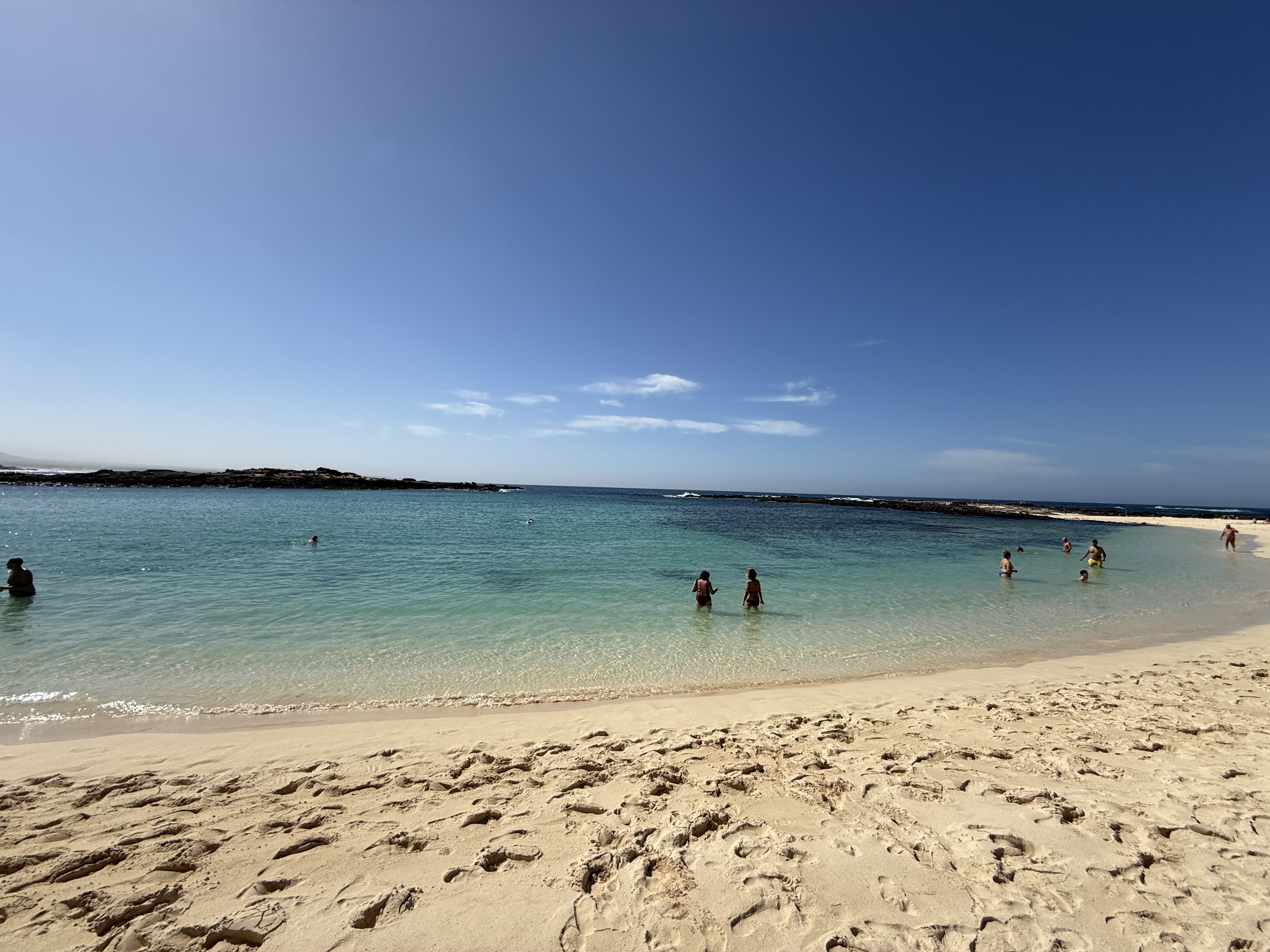
We also drove over to La Concha at El Cotillo. It was exactly what we wanted for a few hours: nice sand, clear water and a good place for a swim.
There were only a few snack bars immediately behind the beach. That suited us; we were quite happy spending the time on the sand and in the sea.
Oasis Wildlife
Oasis Wildlife was one of our favourite days out. We easily filled a full afternoon there and could have stayed longer.
What stood out was how pleasant the whole place was to walk around. It was clean, well kept and surprisingly lush, with lots of vegetation that made it feel very different from some of the drier parts of the island.
The elephants, hippos, crocodiles and giraffes were among the animals we enjoyed seeing most.
Driving around Fuerteventura
For the kind of holiday we like, hiring a car was essential. We enjoy getting out of the resort, seeing different places and having the flexibility to change plans as we go.
Driving was very easy. The island was quiet, the roads were straightforward and we never found getting around stressful.
If you were happy spending most of your time around the hotel, beaches and Corralejo itself, though, you could easily manage without one.
What the scenery was really like
The beaches were the standout scenery for us. With pale sand and clear blue water, some of them looked almost Caribbean in the right light.
Inland, the island was much more volcanic and barren. We didn’t find that unpleasant — it had its own character — but there was noticeably less green than we’re used to seeing on Tenerife. Visually, parts of the island reminded us more of Lanzarote.
What was the weather like in February?
For most of the trip, daytime temperatures were around 25°C with clear skies. The first couple of days were cloudier and windier, and temperatures struggled to get much above 19°C, but after that the weather improved noticeably.
The wind was definitely there, especially by the coast, but it never spoiled the holiday. You wouldn’t want to leave a newspaper loose on the beach for long, though.
Away from the coast it was much calmer. We barely noticed the wind in Corralejo itself or while visiting Oasis Wildlife.
Would we go back?
Yes. We enjoyed our week, and Corralejo would still be our pick for a first visit to Fuerteventura. We’d also look more closely at the resorts in the south next time; a few looked appealing enough to tempt us into trying a different base.
If we were choosing between Fuerteventura and Tenerife for another February trip, though, Tenerife would probably win. We like to be out doing things, and it gives us more variety in both scenery and days out. It also feels a little smarter in parts.
That comes down to what we want from a holiday. Fuerteventura’s beaches, open space and quieter pace could easily make it the better choice for someone else.
We planned this as a summer trip in the Alpine region: four nights exploring the mountains and valleys around Interlaken, followed by a week beside Lake Annecy. The two halves had plenty in common — beautiful scenery, lakes and days spent outdoors — but each gave us a different version of an Alpine summer holiday.
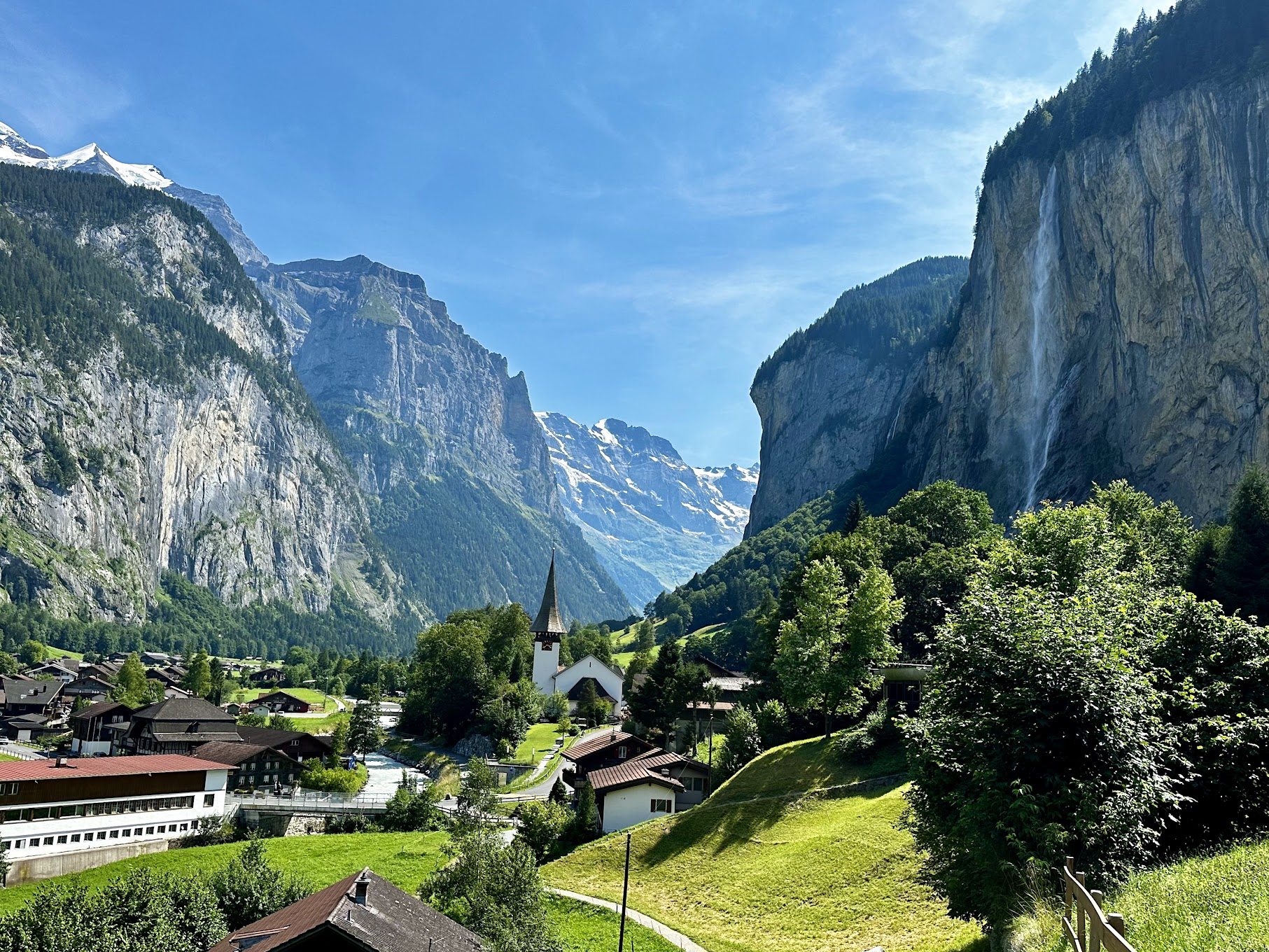
The idea for the trip really started with Lauterbrunnen. We had seen the classic view of the little church beneath steep green valley walls, waterfalls dropping from the cliffs and snow-topped mountains beyond. It was exactly the kind of Alpine scenery we wanted to experience, and unlike anything we had really seen on previous trips.
Switzerland still exceeded our expectations. Around Interlaken, the scenery seemed to come in layers: green valley floors, huge mountain walls and then snow-topped peaks beyond them against clear blue skies. That combination became one of the defining memories of the trip.
Trip highlights
Jungfraujoch — snow, the Aletsch Glacier and a memorable journey into the high Alps.
Cycling Lauterbrunnen Valley — one of our favourite ways to experience the scenery at ground level.
Lake Thun and Thun — a relaxing change of pace after the mountain days.
Swimming around Lake Annecy — clear water, diving platforms and mountain views.
Annecy old town — canals, flowers, historic buildings and one of the most distinctive towns of the trip.
Lake Annecy brought a slower rhythm rather than a completely separate kind of holiday: more swimming, cycling, campsite evenings and time around the lake, but still with the mountains and outdoor setting tying the whole trip together.
The trip at a glance
We flew into Zurich and took the train to Interlaken, where we stayed for four nights at Hotel Interlaken.
From there we explored Jungfraujoch, Grindelwald, Lauterbrunnen, Wengen, Lake Thun, Thun and Brienz.
We then travelled by train from Interlaken to Geneva, collected a hire car and drove to Lake Annecy, where we spent seven nights at Camping Les Fontaines.
For us, the transport split was almost ideal. Switzerland was so easy to explore by train that we never felt we needed a car, while having one in France gave us much more flexibility around Lake Annecy.
Interlaken made an excellent base
One of the first things that struck us was just how easy Switzerland was to get around.
The trains were superb and seemed to run like clockwork. Connections were straightforward, the whole system felt dependable and there was never a point where we thought a hire car would have improved the Swiss half.
Interlaken itself was ideal for us because it was both a pleasant place to stay and a brilliant base for exploring the surrounding region. We could head out to the mountains and lakes during the day, then come back somewhere with enough restaurants and bars to make the evenings enjoyable.
We stayed at Hotel Interlaken, which suited the trip perfectly. It was central, neat, tidy and cosy, with an excellent location for getting around. We had not booked this holiday to spend much time inside a hotel, so there was little point paying for facilities we would barely use. What mattered was having somewhere comfortable and convenient to return to after being outdoors all day.
We would happily stay there again.
Four nights gave us enough time to do what we had planned, although we could easily have filled a full week around Interlaken.
For what we reached from Interlaken without a car, and when a village base might suit you better, read Is Interlaken a Good Base?
Jungfraujoch — one of the highlights of the trip
Jungfraujoch was one of the biggest highlights of the entire holiday, and the journey up was part of the experience rather than simply a way of getting there.
We had booked in advance, and although it was busy at the top, it never felt unmanageable. What surprised us most was how much there was to do once we arrived.
We stayed for around two hours, spent time out on the snow, admired the extraordinary scale of the Aletsch Glacier and somehow ended up sledging during a summer holiday.
Despite all the snow, it was much warmer than we expected. We could feel the altitude slightly, but none of us felt unwell.
The glacier itself was genuinely impressive. Photographs struggle to convey its scale, and seeing it stretching away through the mountains was one of those occasions when the real thing comfortably beat the pictures.
The boys enjoyed the whole experience, and so did we. Along with Lauterbrunnen, it was one of the stand-out days of our time in Switzerland.
Grindelwald — worth stopping for in its own right
We deliberately spent time in Grindelwald rather than simply passing through.
We had lunch and a few beers in the sun and took the opportunity to sit and enjoy the huge mountain views around us. It was one of those places where not doing very much was part of the appeal.
Grindelwald and Lauterbrunnen are often compared, but we would not really choose between them. Grindelwald felt more open and elevated, while Lauterbrunnen had the drama of being right down on the valley floor with the cliffs rising around us.
Both were wonderful in their own way.
Lauterbrunnen — the place that inspired the trip
Lauterbrunnen was the place we had pictured before we even arrived in Switzerland.
Seeing that famous valley in real life — the green meadows, church, waterfalls and enormous mountain walls — was a reminder of exactly why we had chosen the area in the first place.
Rather than just visiting the obvious viewpoints, we had booked bikes before flying out and spent a few hours cycling through the valley. It turned out to be one of the best decisions of the holiday.
The bike hire was straightforward, the route was moderate rather than difficult and the roads were quiet. Cycling felt like the ideal way to experience the valley: we could cover far more ground than we would have done comfortably on foot, while still stopping whenever we wanted.
The scenery was exceptional. Green meadows ran alongside the alpine river, waterfalls dropped from the cliffs and snowy mountains rose beyond the valley walls. That layered landscape was probably the defining visual memory of our Swiss stay.
We stopped at cafés along the way and spent somewhere between two and four hours cycling. On a hot day, it felt about right: long enough to feel like a proper outing without becoming a slog.
The boys enjoyed it just as much as we did.
Staubbach Falls felt almost inseparable from Lauterbrunnen itself, while Trümmelbach Falls offered something very different. The enclosed gorge, walkways and water crashing through the rock made it much more immersive.
We would not rank one above the other. Both were memorable for different reasons.
After the ride, we also called in at Wengen, which gave us another perspective on the region and reinforced just how many worthwhile places sit within a relatively compact area.
Lake Thun and Thun — a change of pace
After spending so much time right inside the valleys and mountains, the Lake Thun boat trip was a welcome change.
The journey was relaxing, and the colour of the water was striking — that vivid Alpine blue-green that makes the Swiss lakes look so distinctive.
We passed Merligen, which looked lovely from the boat, although we did not get off there, and we saw the historic Blümlisalp paddle steamer out on the water.
The trip took us on to Thun, where we spent around three hours wandering the old town. We really liked it. It felt distinctive without being overly touristy, and part of the afternoon was spent having lunch and a few beers in the square beneath the castle.
We did not go inside the castle, but having it sitting above the town was part of what gave Thun its character.
Earlier in the stay, we had also walked from Hotel Interlaken to a lido on Lake Brienz for a swim. The setting was lovely and the facilities were good.
The lido pool itself was fine, but when we swam in Lake Brienz the water was very cold.
Very cold.
It was still enjoyable, though, and made a memorable first taste of Alpine lake swimming.
From Switzerland to Lake Annecy
When our four nights in Switzerland were over, we took the train from Interlaken to Geneva.
The rail journey was straightforward, and by this point we were very comfortable relying on Swiss public transport.
In Geneva we collected a hire car and drove on to Lake Annecy. Public transport had been the right choice in Switzerland; having a car then gave us the flexibility we wanted for the French half.
Camping Les Fontaines — exactly the kind of base we wanted
For the French half we stayed at Camping Les Fontaines.
It was not intended to be a luxury hotel experience, and we did not judge it as one. We wanted a clean, comfortable and practical base with enough going on to make time at the campsite enjoyable.
The lodge suited that perfectly, and having our own outdoor space made a real difference. We could sit outside, have a drink, cook on the plancha and relax without needing to go anywhere.
The pools and waterslides were a big part of the week, particularly for the boys. The site also had a nice bar with a slightly cosmopolitan feel and a restaurant serving very good food.
The surroundings were still beautiful, with mountains around us and the lake close by. Our only small reservation was that the campsite sat roughly a mile from the water. If we repeated the trip, having a similarly attractive base right beside the lake — or within an easy evening walk of a lakeside village — would make the location even better.
We would happily stay there again.
Talloires and swimming around Lake Annecy
Talloires was one of our favourite places around the lake.
It felt lively without being overwhelming, and on a beautiful summer day it was exactly the sort of place you wanted to be. The water was clear and refreshing, the mountain backdrop was superb and swimming felt like a proper part of the day rather than simply a way to cool down.
One thing the boys particularly enjoyed around Lake Annecy was the number of proper swimming areas with jetties, platforms and diving boards. That made the lake feel like somewhere designed to be enjoyed, not merely admired from the shore.
The paragliders overhead added to the atmosphere too. There were enough of them to become a spectacle in their own right and they fitted perfectly with the outdoorsy character of the area.
We also used other swimming spots around the lake, including Saint-Jorioz, where there were proper diving platforms and bathing areas.
Swimming became a recurring part of the week rather than something we did once and moved on from, and it was a big part of the appeal for us as a family with teenagers.
Annecy old town — one of the highlights of the French half
Annecy itself was one of the standout places of the week.
The first thing that struck us was the colour. The canals had a rich green-blue tone, flowers seemed to be everywhere and the old stone buildings made the town feel almost theatrical.
At times it looked like a medieval town from a film.
There was also something slightly grand about it. The waterfront, old architecture and decorative feel gave Annecy a sort of old Grand Tour atmosphere — elegant, colourful and full of character.
It was busy, but never unpleasantly so.
We had beers and lunch at a bar on a bridge somewhere in the old town, wandered along the canals, saw the Palais de l’Île and found some very good ice-cream parlours along the way.
Annecy did not just feel pretty. It felt genuinely distinctive.
Cycling around Lake Annecy
We also hired bikes and cycled around the lake.
It was a good way to experience more of the area and something we would happily have done more of, but the week was very warm. On the hottest days, longer rides started to feel less appealing, so we sometimes used the car instead.
That was probably the practical reality of visiting in the middle of summer: cycling is a great way to explore the lake, but when the temperature rises, having another option helps.
For more detail on the French half, read our week at Lake Annecy, including our favourite swimming spots, Annecy old town, cycling and the views from Montmin.
Why the combination suited us
The appeal was that the whole holiday shared the same Alpine theme without feeling repetitive.
Around Interlaken, the emphasis was on huge mountains, glaciers, trains, valleys, cycling and active days outdoors. The scenery had the strongest wow factor of the trip and remains among the most memorable we have seen.
Lake Annecy kept the mountains and outdoor setting but softened the pace: more swimming, cycling, campsite evenings, good food and drinks, and time in lakeside villages and Annecy itself.
That progression — from high-mountain adventure to relaxed lake days — gave the trip variety without making it feel like two unrelated holidays.
Four nights in Switzerland was enough for our itinerary, although we could easily have stayed longer. Seven nights at Lake Annecy felt about right: enough time to relax properly while still having plenty to do.
Our only real tweak would be the French base: somewhere equally attractive but right beside the lake or within walking distance of a lakeside village.
Other than that, the balance of the itinerary felt about right.
Would we do it again?
Absolutely.
There were no real disappointments. The logistics were straightforward, the boys enjoyed both halves and the change of pace kept the holiday interesting from start to finish.
For us, it was a fabulous Alpine-region summer holiday: adventure around Interlaken followed by fun and relaxation at Lake Annecy.
We’ve visited plenty of Greek islands over the years, but after this trip Skiathos came out on top.
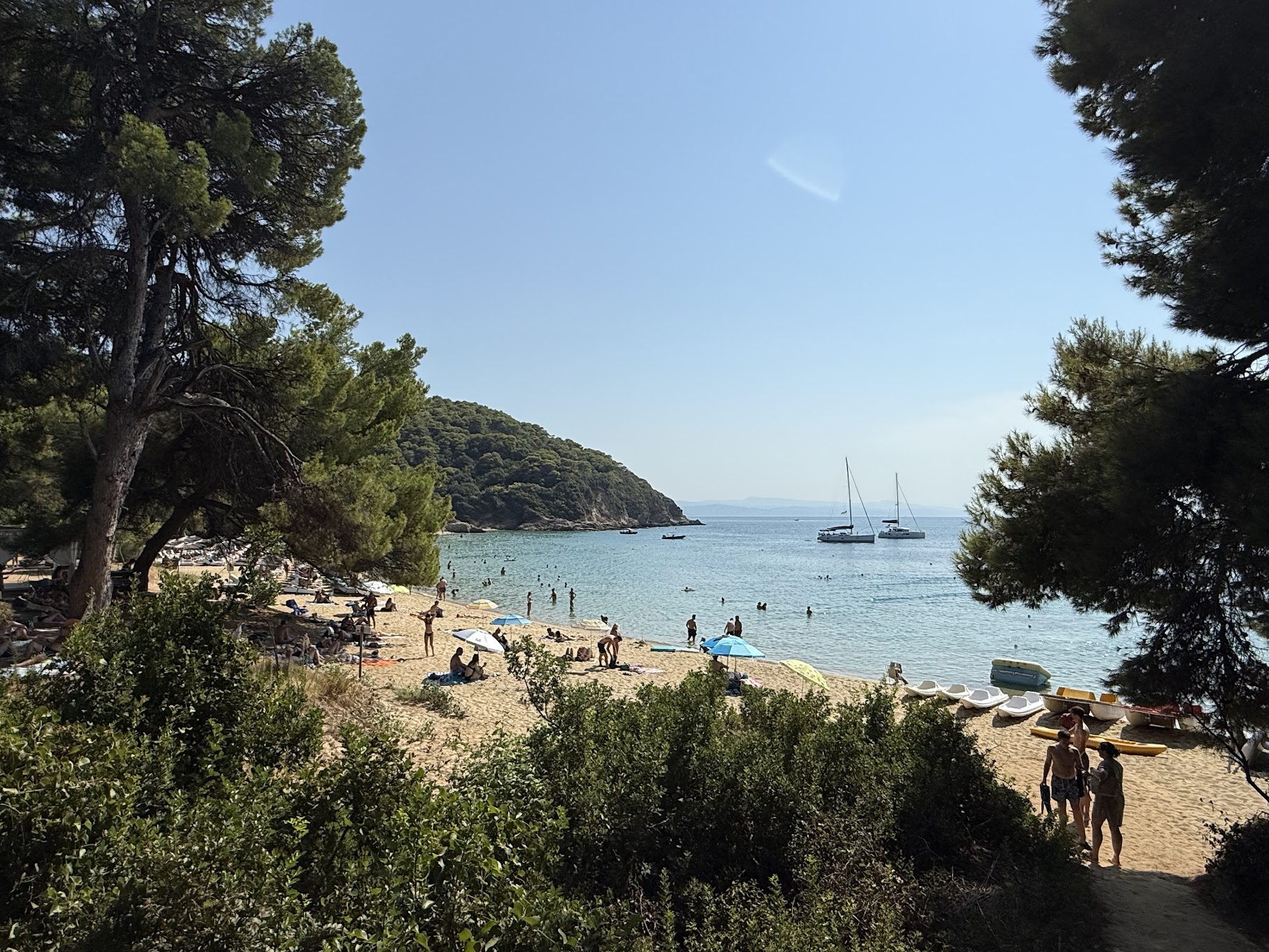
It combines many of the things we want from a Greek summer holiday in one relatively small island: lush green scenery, golden beaches, warm turquoise sea, an attractive and bustling town and enough variety to keep us occupied without feeling that we needed to spend the week sightseeing.
That was particularly important on this trip. We weren’t looking for a packed itinerary. The idea was to chill in beautiful surroundings without getting bored, and Skiathos turned out to be almost perfect for that.
We spent seven nights at Elivi Skiathos, near Koukounaries Beach, with our two teenage boys. Between the hotel, its four beaches and evenings in Skiathos Town, we found we really didn’t need much else.
Why Skiathos?
Skiathos is a remarkably green island. Pine trees cover much of the landscape and come almost right down to some of its beaches.
That creates the combination that, for us, makes Skiathos particularly attractive: deep greens, golden sand and clear turquoise or aquamarine water.
Around Koukounaries there are also views across the water towards other land, something we always enjoy in a coastal destination. Boats of all sizes pass through too, so there always seems to be something to look at.
Despite its popularity, Skiathos retains a relaxed feel. The island is small enough to get around easily, while Skiathos Town provides plenty of shops, restaurants and bars when you want somewhere livelier.
Staying at Elivi Skiathos
Elivi was a big reason the holiday worked so well.
It’s a large, high-end resort spread across extensive landscaped grounds at the western end of the island. Rather than feeling like one huge hotel complex, the accommodation and facilities are dispersed amongst the greenery, giving parts of the resort almost a small-village feel.
We enjoy walking, so its size was never an issue for us. Golf carts are also available for guests who would rather not walk between the different areas.
The resort felt modern and high-end without being overly formal, and despite its size it rarely felt particularly crowded.
Our room at Elivi
We stayed in an Elivi Nest Infinity Interconnected Suite with Private Pool.
It was an excellent setup for a family with teenagers: 70 square metres on the ground floor, essentially comprising two bedrooms connected by an internal door, with two separate private pools outside and views towards the sea and Little Banana Beach.
The rooms themselves were modern and very good quality, although we probably wouldn’t describe them as ultra-luxurious. What made the accommodation special was the combination of space, the pools and the views.
Being able to step straight outside to our own pools with the sea beyond was exactly what we wanted from this particular holiday.
Breakfast and service at Elivi
Breakfast was very good, with a large buffet covering cooked options, cold food, fruit, cereals and plenty of choice.
Service throughout the hotel was friendly and attentive.
We particularly liked Elivi’s use of WhatsApp for communicating with the hotel. It was an easy way to ask questions or arrange things without repeatedly visiting reception, and responses were quick and helpful.
The public areas, bars and restaurants were consistently clean, smart and well staffed.
Our only slight surprise was how quiet the main hotel bar could be in the evening. It was a very pleasant place, but we expected it to be rather more bustling.
That may partly be because Elivi is so spread out and guests have numerous bars, restaurants and beach areas to choose from, as well as plenty of alternatives around Koukounaries.
The four beaches at Elivi
One of Elivi’s biggest strengths is that you effectively get four different beaches without having to leave the resort area.
Each also has its own Elivi beach bar: Xenia Beach Bar at Koukounaries, Grace at Xenia/Ambelakia, Nest at Big Banana and Black Bird at Little Banana.
We thought all four bars were very good, serving drinks and a useful range of food suited to a beach lunch or snack.
The beaches themselves, though, have quite different personalities.
Koukounaries Beach
Koukounaries is widely regarded as one of Skiathos’s best beaches, and it’s easy to see why.
It’s long and relatively wide, with beautiful sand, gently shelving clear water and a striking backdrop of vibrant green pine trees.
You can actually smell the pines at times, which adds to the sense of being somewhere rather special.
There are plenty of facilities, places to get food and drinks, watersports and a pier that proved popular for jumping into the sea.
Elivi has its own area of loungers, making it easy to spend a full day there.
It’s probably the classic all-rounder of the four Elivi beaches. Our only reservation was that it could feel busier than the others.
Big Banana Beach
Big Banana was actually our favourite.
It’s a little smaller than Koukounaries and, when we visited, felt less crowded. That extra space suited us, while its slightly wilder character gave it an edge.
At one end, rocks jut into the water and create a more cove-like feel. We found this particularly good for snorkelling, with steep underwater rock faces, plenty of fish and areas of seagrass.
There are also impressive views across the water towards the mainland.
Atmosphere-wise, Big Banana hit the sweet spot for us. It had a cool, fun holiday vibe and felt vibrant without being full-on.
If we’d had more room and fewer crowds at Koukounaries, our view of the two might have been different. But on this trip, Big Banana just edged it.
Xenia Beach / Ambelakia
Xenia Beach — or Ambelakia as it is officially called — is much smaller and quieter than Koukounaries and Big Banana.
It has lovely sand and clear water, with the pine-covered surroundings and attractive views that characterise this end of Skiathos.
It felt more intimate and sheltered than the larger beaches, with good Elivi loungers and easy access to Grace Beach Bar.
This one would work for all types of visitor, but it may particularly appeal to an adult couple looking for a bit more peace and quiet.
Black Bird / Little Banana Beach
Black Bird Beach, on Little Banana, is the smallest and perhaps the most unusual of the Elivi beaches.
It has another beautiful setting, with clear water and a more enclosed feel, while Black Bird Beach Bar gives the organised hotel section a higher-energy beach-club atmosphere with music and drinks.
Little Banana has traditionally also had a naturist character away from the organised Elivi section, giving it quite a different feel from Koukounaries, Big Banana and Xenia.
Of the four, this was the one that suited us least.
It wasn’t a bad beach — far from it — but knowing what we know now, we’d probably spend that day somewhere else.
How did the Elivi beaches compare?
For us, Big Banana was the favourite overall: a little quieter, slightly wilder and particularly good for snorkelling.
Koukounaries was the classic all-rounder, with its broad sandy beach, clear water and pine backdrop.
Xenia/Ambelakia was the calmest and most intimate.
Black Bird/Little Banana was the liveliest and most alternative.
We also visited Troulos Beach, which we liked. It has attractive sand, an offshore island to look towards, decent snorkelling, good places for food and drink and even some resident swans.
But we preferred three of Elivi’s four beaches.
With more time, we would also have returned to Kanapitsa, which we have visited before, and perhaps tried Agia Eleni.
Eating and drinking around Koukounaries
There are enough restaurants and bars outside Elivi that you don’t have to eat within the resort every night.
A few stood out.
AlaMar — Greek and Mediterranean cuisine — smart, cosy but modern, with something of a large beach-bar feel — excellent food and drink — friendly, attentive service — somewhere we would happily return to.
Cookoonari — Greek and Mediterranean cuisine — smarter, slightly grander and more refined, with almost the feel of a city restaurant in an attractive courtyard setting — excellent food and drink — a little more high-end — again somewhere we’d happily return.
Blue Lagoon Vibes — café/bar — small, relaxed and cool, with something of a deli feel — ideal for informal food or simply stopping for a beer — and with live sport on the screen.
Between those and Elivi’s restaurants and beach bars, we never felt short of options.
Skiathos Town in the evening
Skiathos Town was the other major ingredient in the holiday.
We only visited in the evenings, although that’s something we’d change next time.
It is almost the archetypal small Greek island town: white, sugar-cube buildings with little flecks of colour rise away from the waterfront, narrow streets work their way up the hills and plants spill over balconies and sun-warmed walls.
The port itself is constantly interesting, with fishing boats, ferries, yachts and occasional superyachts coming and going.
Planes also pass remarkably low near the waterfront on their approach to Skiathos Airport, adding another unusual feature.
We liked simply wandering around the harbour, walking around Bourtzi and exploring the streets, shops and cafés.
At night, the town felt busy, cheerful and atmospheric without losing its Greek-island character.
It reminded us slightly of the illustrations in children’s picture books where everything that belongs in a town or harbour seems to have been squeezed into one scene: boats, cafés, shops, restaurants, people, bars and buildings climbing the hillside.
There always seemed to be something going on.
Eating and drinking in Skiathos Town
There are far too many bars and restaurants in Skiathos Town to sensibly list them all.
And part of the pleasure is simply wandering through the streets and choosing somewhere that appeals.
A few places we particularly remember were Hellinikon, Anderssons Bar and Mouria Taverna.
We also stopped for drinks at several bars along the port. We didn’t particularly feel the need to seek out a specific one — the ones we tried were all perfectly good and contributed to the relaxed, lively atmosphere of an evening on the waterfront.
Getting around Skiathos
Getting around was straightforward.
The coastal bus is frequent and useful, although in the evening it could get very busy and on a couple of occasions buses passed stops without picking anyone up.
We also used taxis between Koukounaries and Skiathos Town. The journey took roughly 20 minutes depending on traffic.
Perhaps the nicest option was the water taxi between Koukounaries and Skiathos Town.
It took roughly 20 minutes and travelled along the coastline in a relatively small boat. Apart from being practical, it was simply an enjoyable way of making the journey.
We also hired a car and found driving around Skiathos straightforward. Roads were generally quiet away from town. Skiathos Town itself was busier but never felt particularly chaotic.
What did we actually do for a week?
Not that much — and that was the point.
This wasn’t designed as a sightseeing holiday.
Most days revolved around the villa, the beaches, swimming, snorkelling, eating and enjoying the surroundings. In the evenings, we could head into Skiathos Town when we wanted something livelier.
That combination meant we were able to properly relax without ever feeling bored.
For us, the three main ingredients were simple:
a lovely place to stay + a choice of genuinely different beaches + an attractive town for the evenings.
Skiathos delivered all three.
What would we do differently?
Seven nights was enough for us, but we could easily have filled another two or three days.
With more time, we would probably have taken a boat trip to Skopelos, driven further into the island to visit the Monastery of the Annunciation, explored another beach such as Kanapitsa and perhaps gone on a fishing trip.
We’d also go into Skiathos Town more often in the evenings and make sure we saw it during the day.
And, with hindsight, we’d probably swap our day at Black Bird for another beach.
Who would we recommend Skiathos to?
Almost everyone.
Families are particularly well catered for. The beaches and warm, clear sea are an easy win with children and teenagers, while parents still have good restaurants, bars, scenery and places to explore.
Couples could have a completely different but equally enjoyable holiday, particularly by choosing quieter beaches such as Xenia and spending evenings in Skiathos Town.
There also seems to be a good range for different budgets, from smarter boutiques and restaurants through to casual cafés, bars and ordinary convenience stores.
The one group we probably wouldn’t choose Skiathos for is anyone whose main priority is a hard-core party holiday.
There are lively places, but that isn’t what defines the island.
Our verdict on Skiathos
Skiathos has a combination we haven’t quite found elsewhere.
It is green without feeling remote, lively without feeling overwhelming, attractive without feeling overly manicured, and small enough that getting from a quiet beach to a bustling town is easy.
Elivi gave us a fantastic base, while the beaches meant we could vary our days without needing to travel far.
And whenever we wanted something different, Skiathos Town was there for an evening of wandering, eating, drinking and watching the port go by.
For a holiday whose main objective was simply to slow down somewhere beautiful without getting bored, it was hard to fault.
After visiting plenty of Greek islands over the years, Skiathos became our favourite.
Desert, Neon, Red Rocks, Canyons, Lakes, Wilderness & Californian Coast in 18 nights
The view towards Monument Valley from Forrest Gump Point, July 2026.
This post contains affiliate links. We may earn a small commission, at no extra cost to you.
In summer 2026, we took a road trip through the American West, starting and finishing our first loop in Las Vegas before travelling on to Lake Tahoe, Yosemite and Los Angeles.
This is the trip as we actually experienced it: the route we drove, the hotels we stayed in, the places we visited, what the highlights were and what we’d do differently next time.
The route
Las Vegas → Hoover Dam → Route 66 → Sedona → Grand Canyon → Monument Valley → Horseshoe Bend → Las Vegas → Lake Tahoe → Yosemite → Los Angeles
Our route through Nevada, Arizona, Utah and California.
Trip at a glance
The trip
18-night family trip
The route
Nevada, Arizona, Utah and California
How we travelled
Two road-trip sections, with internal flights from Las Vegas to Reno and Fresno to Los Angeles
Las Vegas: where the trip began
We started the trip in Las Vegas. It was our first visit, and we wanted somewhere that would give us the full Vegas experience while still working well for a family travelling with teenagers.
The Las Vegas Strip, with the Eiffel Tower at Paris Las Vegas.
Where we stayed: Mandalay Bay
We chose to stay at Mandalay Bay, towards the southern end of the Strip. The pool was important to us for some downtime, as was having plenty of bars, restaurants and other facilities on site. More than anything, though, we wanted that big, larger-than-life Las Vegas resort experience.
Our room was spacious with a great view along the Strip. We wouldn’t describe it as especially luxurious or particularly modern, but it was very good and worked well for the stay. Compared with some of the rooms later in the trip, Mandalay Bay had more of the traditional ornate feel of a large American resort hotel.
We’d wondered whether being at the south end of the Strip might be inconvenient, but in practice it worked really well.
Mandalay Bay’s Shark Reef Aquarium was great too, and an easy attraction to visit without even leaving the resort.
Of all the hotels on the trip, Mandalay Bay was probably the one we’d most readily recommend purely as a property for a family with teenagers, largely because of the pool complex and easy access to shops and attractions.
We spent plenty of time simply exploring the Strip. The Bellagio fountains were a must for us, particularly as we’re fans of Ocean’s Eleven, and we enjoyed walking through some of the other famous hotels. The Venetian, with its canals and extraordinary indoor sky, Paris Las Vegas and the huge interior of Luxor were all worth seeing in their own right.
The indoor canals at The Venetian.
Away from the traditional Strip attractions, we visited AREA15, the Museum of Illusions and a retro arcade. Las Vegas worked just fine with teenagers who enjoyed the varied sights and the general buzz of Vegas. They obviously couldn’t take part in the casino side of Vegas, but there was still more than enough to keep everyone entertained. Just being in such a cool, larger than life place was plenty to keep everyone excited and entertained.
Was Las Vegas worth it?
Absolutely. We went because we wanted to experience Las Vegas for ourselves, and it also served as a great starting point for the trip. It didn’t disappoint. The heat in July was intense but was a dry heat which made it manageable.
We’d happily return. As it turned out, we did later in the same trip.
Hoover Dam and Route 66: the road trip begins
Leaving Las Vegas, we picked up our hire car and headed towards Arizona, with Hoover Dam as our first stop. It was an easy way to break up the journey and somewhere we’d wanted to see anyway before continuing towards Route 66.
Hoover Dam
Hoover Dam is one of those places where the scale is difficult to appreciate until you’re actually standing there. We didn’t need to spend hours exploring it. For us, it worked perfectly as the first stop on the drive from Las Vegas towards Arizona.
Our first taste of Route 66
From Hoover Dam we continued towards Kingman, where we joined historic Route 66. This was one of the parts of the trip we’d particularly been looking forward to. There is something special about actually driving a road you’ve heard about for years rather than simply using it to get from one place to another.
We stopped at one of the old Route 66 petrol stations along a stretch of the road that helped inspire the world of Cars. As fans of the films, that made the stop particularly memorable, but even without the connection it was a great place to get a feel for the history and character of the old road.
As we continued towards Seligman, the weather changed dramatically. July is monsoon season in Arizona and we encountered some impressive storms before eventually heading down from the relatively barren uplands to the more alpine landscape near Flagstaff and down towards Sedona. It is a gloriously scenic drive from Flagstaff to Sedona through plunging red rock canyons scattered with lush green vegetation. Apparently this route is a favourite of fans of the Cars film because of its similarities to the scenery on the film. After a long drive, our kids were genuinely captivated by the scenery and excited for the next leg of our journey.
The drive: Las Vegas to Sedona
Driving time: Allow around 5–6 hours of actual driving, depending on the Route 66 detours you take. With Hoover Dam, stops along Route 66 and breaks along the way, this can easily become a full day’s journey.
Our route: Las Vegas → Hoover Dam → Kingman → Route 66 → Seligman → Flagstaff → Sedona.
We wouldn’t rush this drive. Hoover Dam and the Route 66 section deserve proper time on the way to Sedona. The roads for most of the journey were straightforward, and the changing scenery made this one of the most memorable driving days of the trip. We saw diners, old locomotives, vintage Route 66 sights and really felt like we’d lived Route 66 not just driven on it. As Cars film fans, you could spot where the Pixar team had drawn inspiration for the film from this part of Route 66.
The old police car outside Mr D’z Route 66 Diner.
Sedona: red rocks and one of our favourite hotels
Arriving in Sedona felt like entering a completely different landscape. After the long drive from Las Vegas, Route 66 and Flagstaff, the red rock scenery surrounding the town was spectacular. We immediately understood why Sedona is such a popular stop on an Arizona road trip. I had learned about Sedona on a previous visit to Arizona and always wanted to visit this unique, iconic and beautiful landscape.
Sedona’s red rocks.
We stayed at Amara Resort and Spa, which turned out to be an excellent choice. We wanted somewhere within walking distance of shops, bars and restaurants, but also somewhere that felt part of the landscape.
Where we stayed: Amara Resort and Spa
Amara is a smart, rustic boutique hotel in a setting that worked brilliantly for us. It sits tucked away from the main road down by Oak Creek, which made it feel calm and private while still being within walking distance of Sedona’s shops, bars and restaurants.
The standout feature was the view from the infinity pool across the creek towards Sedona’s red rocks. It was one of those hotel settings that felt completely connected to the destination.
We also thought the service at Amara was excellent. In fact, of all seven hotels on the trip, Amara gave us the best overall service experience.
What we did in Sedona
Sedona was somewhere we were happy simply being outdoors. We drove up to Airport Mesa for the views across the red rocks, walked in Red Rock State Park and spent time around Oak Creek. The scenery is the main attraction here, and we found we didn’t need to pack the days with organised activities.
Slide Rock State Park was one of our favourite stops. It was easy to access, and swimming in the creek was wonderfully refreshing in the Arizona heat. For a family travelling in summer, we’d definitely recommend allowing some time for the water rather than spending the whole visit hiking in the heat.
A trip up to the Chapel of the Holy Cross is a must to get 360 degree views of the majestic red rock scenery surrounding Sedona.
Oak Creek at Slide Rock State Park.
Was Sedona worth it?
Definitely. Sedona was one of the places that exceeded our expectations. The scenery is spectacular, but what we particularly liked was the combination of the landscape with a town where we could walk to restaurants and bars in the evening.
We’d also happily stay at Amara again. Its location was a major part of why Sedona suited us so well.
We’ve now written a separate first-hand account of our stay, including Amara Resort & Spa, Slide Rock, Airport Mesa, the Chapel of the Holy Cross, where we ate and whether three nights felt long enough: 3 Nights in Sedona: What We Did, Where We Stayed & Where We Ate.
Grand Canyon: spectacular, even on a tight schedule
We left Sedona after breakfast and drove north to the South Rim of the Grand Canyon. This was one of the days when our itinerary was fairly tight: we wanted to experience the Grand Canyon but also needed to reach Monument Valley in time to see it before dark.
In the end, we spent around two hours at the South Rim, stopping at several viewpoints. Obviously, that isn’t enough time to explore the Grand Canyon in any depth, but it was enough to appreciate the extraordinary scale of the place and made far more sense to us than missing it altogether.
Looking across the Grand Canyon from the South Rim.
Is two hours at the Grand Canyon enough?
It depends what you want from the visit. If the Grand Canyon is one of the main reasons for your trip, we’d certainly allow much longer and ideally stay nearby. But as part of a wider road trip, we found that two hours at the South Rim was genuinely worthwhile.
We didn’t try to cram too much in. We concentrated on seeing the canyon from a few different viewpoints before continuing east towards Monument Valley. With limited time, that worked well for us.
Driving time: This was effectively a full day’s journey once our stop at the Grand Canyon was included.
Our route: Sedona → Flagstaff → Grand Canyon South Rim → Monument Valley.
The challenge was timing rather than the driving itself. We wanted enough time at the Grand Canyon to make the visit worthwhile, but we were also keen to reach Monument Valley before dark to see the sunset. It meant keeping the day moving, but arriving as the light was beginning to fade turned out to be a memorable way to see Monument Valley for the first time.
Monument Valley: somewhere we’d always wanted to see
Monument Valley was one of the stops we were most excited about when planning the route. There is a mystique to the place from seeing it so often in films and photographs, and arriving towards dusk made the first view particularly impressive.
The weather wasn’t completely on our side. July falls within the summer monsoon season, and the cloud meant we didn’t get the clear night skies we’d hoped for. Fortunately, the views the following morning were beautiful.
Monument Valley’s rock formations.
Where we stayed: The View Hotel
We stayed at The View Hotel, inside Monument Valley Tribal Park. For us, the main reason for choosing it was simple: the location. The rooms look directly out towards the famous Monument Valley landscape, so rather than having to drive somewhere for the views, they were right outside our window.
The room itself wasn’t one of the smartest or most high-end of the trip, but that didn’t really feel like the point of staying there. It suited the setting, and the character of the hotel added to the wider Monument Valley experience.
The absolute show-stopper by a mile was the view. Being able to look straight out over Monument Valley made the hotel feel like it belonged there.
Forrest Gump Point
The next morning we drove out to the famous view along the road towards Monument Valley. It’s one of those locations that looks instantly familiar, even before you stop the car. This view of the road cutting through the desert was already iconic when it featured in Forrest Gump.
As big fans of the Cars films, there was also something particularly fitting about driving through this landscape with “Life Is a Highway” playing in the car. It was one of those moments that ended up becoming a great memory from the trip.
Monument Valley’s buttes from the roadside, on our drive out the next morning.
Was Monument Valley worth it?
Absolutely. Monument Valley absolutely lived up to the mystique we’d built up around it before the trip. Staying at The View Hotel made a real difference because we were able to experience the landscape at dusk and again first thing the following morning rather than simply driving in, taking some photographs and leaving.
If we were doing the trip again, we’d stay there again. Even though the weather prevented us from seeing the night sky at its best, Monument Valley was still one of the most memorable stops of the road trip.
Horseshoe Bend and back to Las Vegas
We left Monument Valley in the morning and headed west via Page before continuing back to Las Vegas. Rather than treating it simply as a long driving day, we stopped at Horseshoe Bend along the way.
Horseshoe Bend
Horseshoe Bend is an easy place to recognise from photographs, but seeing the scale of it in person is quite different. It made a natural stop on our route and gave us a chance to break up the journey before the longer drive back towards Las Vegas.
We didn’t need to devote a huge part of the day to it. For us, it worked well as a stop on the journey rather than a destination around which we’d build an entire day.
Horseshoe Bend, near Page.
The drive back to Las Vegas
From Page, we continued west towards Las Vegas, passing close to Zion National Park on the way. This was another driving day where the journey itself was part of the appeal: long, open roads, blue skies and landscapes that seemed to change constantly as we travelled.
We didn’t visit Zion on this trip, but even the drive through this part of Utah made us realise how much there is to come back and explore another time.
Las Vegas again: a very different second stay
Returning to Las Vegas part-way through the trip gave us a chance to experience a different side of the city. Rather than going back to Mandalay Bay, we deliberately chose somewhere different for our second stay.
The Strip at night, with the Eiffel Tower and the Bellagio lake.
Where we stayed: Virgin Hotels Las Vegas
For our second visit we stayed at Virgin Hotels Las Vegas. It felt quite different from Mandalay Bay. It was smaller in scale, quirkier and more contemporary, which was exactly what we wanted.
The room was particularly memorable and felt brighter, smarter and more modern than Mandalay Bay. Mandalay had more of the traditional large-resort feel, whereas Virgin felt fresher and more contemporary.
The layout was unusual too, with a table between the beds that almost made the whole area feel like one large sofa. It gave the room a relaxed, lounge-like feel rather than a completely conventional hotel layout.
Of all seven hotels on the trip, Virgin probably represented the best value for money. It was one of the hotels that impressed us more in person than we expected from the photos.
The Mexican bar and restaurant was lively and busy, and the hotel had a relaxed atmosphere that we really enjoyed. In fact, we liked the stay enough that we wished we’d had another night there.
Was returning to Las Vegas worth it?
Definitely. Building Las Vegas into the route twice turned out to be a better decision than we expected. The two hotels gave us quite different experiences, and the second visit didn’t feel like simply repeating the first.
It also gave us a natural break between the desert road-trip section through Arizona and Utah and the next part of the journey at Lake Tahoe.
The Welcome to Fabulous Las Vegas sign.
Lake Tahoe: even better than we’d hoped
Lake Tahoe was one of the stops we were most excited about before the trip, largely because of those photographs of turquoise water, huge boulders and pine-covered mountains.
Even with those expectations, it didn’t disappoint. The combination of clear blue water, beaches and mountain scenery made it feel completely different from the desert landscapes we’d been travelling through only a short time earlier. It is visually stunning. We were excited about being in ‘Bear Country’ too! But despite much hope and keeping a look out for them, the bears remained elusive!
Lake Tahoe, with pine trees and mountains.
Getting to Lake Tahoe from Las Vegas
We flew from Las Vegas to Reno rather than driving all the way to Lake Tahoe. For our itinerary, this made much more sense than spending another full day in the car after the long driving days we’d already had through Arizona and Utah.
We picked up another hire car at Reno airport and drove from there to Lake Tahoe. Reno is relatively close to Tahoe, so this gave us the flexibility of having a car for exploring the area without having to drive the entire distance from Las Vegas.
Where we stayed: Edgewood Tahoe
We chose Edgewood Tahoe because we wanted a lakeside hotel with a real mountain-lodge feel, while still being close to South Lake Tahoe and its restaurants and bars. It turned out to be our favourite hotel of the entire trip.
The room made an immediate impression. It was luxurious and seriously smart, but still had an earthy, upmarket log-cabin feel that seemed completely right for Lake Tahoe. The layout was beautifully thought out, with a fabulous large bath and an enormous shower. It was one of those hotel rooms where we all walked in and immediately felt excited about staying there.
Looking back across the entire trip, Edgewood was our favourite hotel overall. The room was probably the best we stayed in too, although Regent Santa Monica ran it very close.
What pushed Edgewood ahead was the complete package: the lakeside location, room, grounds, facilities and the grand, luxurious feel of the whole resort. Everything felt superbly done.
The setting was just as impressive. Edgewood has large lawns leading towards the lake, its own beach and a lovely pool, so the hotel felt like somewhere to spend time.
One of the things we particularly liked was that it worked just as well for us as a family as it did as a luxury hotel. There was plenty of room for teenagers to enjoy the lawns while we relaxed nearby, and we really enjoyed having food and drinks at the golf club bar. The whole place had a relaxed feel despite being extremely smart.
For much more detail on the room, private beach, pool, service and why it became our favourite hotel of the trip, see our Edgewood Tahoe Review: Was It Worth It?
Edgewood Tahoe and its lawns, South Lake Tahoe.
What we did at Lake Tahoe
We didn’t feel the need to fill every day with activities at Lake Tahoe. A large part of the appeal was simply being beside the lake, and having Edgewood’s beach, pool and grounds meant we were quite happy spending time at the hotel too.
We did, however, want to see some of the places we’d associated with Lake Tahoe before the trip.
Sand Harbor
Sand Harbor was probably the classic Lake Tahoe scenery we’d pictured beforehand: clear turquoise water, huge granite boulders, beaches and pine trees rising behind them.
It was well worth making the trip from South Lake Tahoe. The combination of the water and mountain scenery was spectacular and very different from the beaches we’d experienced elsewhere on the trip.
We parked just north of Sand Harbor and caught the free shuttle bus, which saved us trying to find a parking space at Sand Harbor itself, as that can be difficult at busy times.
Clear water and granite boulders at Sand Harbor.
Taylor Creek and Emerald Bay
We also walked at Taylor Creek, which gave us another side of Tahoe. Rather than being about beaches and dramatic lake views, this was a quieter walk through the natural landscape around the southern end of the lake. We had high hopes of a bear sighting here (they are very common) but alas, no luck!
From Taylor Creek, we continued by car towards Emerald Bay. The drive itself became part of the experience, with lovely views and scenery as we made our way around this part of the lake.
Emerald Bay was another of those places that looked exactly as we’d hoped Lake Tahoe would look. The elevated views across the water and surrounding mountains were impressive and made this one of the most memorable scenic parts of our time at Tahoe.
One thing worth knowing about this drive is that there is a short stretch with some very steep drops beside the road and relatively little in the way of barriers. We were fine with it, and the section didn’t last long, but anyone with a particularly strong fear of heights may find this part of the drive uncomfortable. We were certainly pleased when the road returned to more level ground!
South Lake Tahoe
We also spent some time in South Lake Tahoe itself. One of the advantages of staying at Edgewood was being close enough to head into town easily for food and drinks, while still having the lakeside setting of the hotel.
We particularly liked The Woods, a relaxed sports bar that suited us well as a family. There were other good eateries and bars in the same vicinity. It was the sort of place where we could get something to eat, have a drink and watch sport without needing to plan the evening around a restaurant reservation.
South Lake Tahoe itself is quite different from the quieter, more scenic parts of the lake we’d explored during the day, but we liked having both. We could spend the day around the lake and then have plenty of choice for somewhere casual to eat or drink in the evening.
Driving around Lake Tahoe
Having a car made exploring Lake Tahoe much easier. The distances around the lake are greater than they can appear on a map, so being able to drive between places such as Sand Harbor, Taylor Creek and Emerald Bay gave us much more flexibility.
Most of the driving we did was straightforward and the scenery was always beautiful. There are, however, some stretches of road around the lake that are more elevated and exposed than others. If you’re particularly uncomfortable with heights, it’s worth looking at your route beforehand rather than assuming that every lakeside road will feel the same.
For us, the benefits of having a car easily outweighed this. It allowed us to stay at Edgewood, explore different parts of the lake at our own pace and still have South Lake Tahoe nearby for restaurants and bars in the evening.
Was Lake Tahoe worth it?
Absolutely. Lake Tahoe was one of the places we’d been most excited about before the trip, and it was even better than we’d hoped. The combination of clear blue water, huge boulders, beaches, pine forests and mountains really is as spectacular as it looks in photographs.
Staying at Edgewood was a big part of the experience for us. It wasn’t simply somewhere to sleep between days exploring the lake. The beach, pool, lawns and setting meant we genuinely enjoyed spending time at the hotel too.
If we returned, we’d happily stay at Edgewood again and we’d allow plenty of time simply to enjoy the lake rather than trying to fill every day with sightseeing. Lake Tahoe ended up being one of our favourite stops of the entire road trip.
Clear turquoise water and pines on the Lake Tahoe shore.
Getting from Lake Tahoe to Yosemite
Rather than taking the more direct route from Lake Tahoe towards Yosemite via US-395 and Tioga Pass, we chose the longer route around the western side of the mountains and approached Yosemite via Mariposa and Highway 140. This was to avoid driving along exposed high roads with steep drops.
There were a couple of steeper sections as we headed away from Lake Tahoe, but we found them absolutely fine. After that, the drive was surprisingly varied. We came out of the mountains onto the flatter plains and passed through some classic American small towns before eventually turning back towards the hills.
The final part of the journey towards Yosemite was particularly beautiful. The landscape gradually became hillier and more dramatic again as we approached the park, so the drive from Lake Tahoe to Yosemite stayed interesting all the way.
The route took longer than the more direct option, but we were happy with our choice. For anyone who isn’t keen on very exposed mountain roads or steep roadside drops, it may be an alternative worth considering.
For Yosemite, our priority was staying inside the valley rather than driving in and out each day. As well as making it easier to explore without worrying about traffic and parking, we liked the idea of staying in a traditional mountain-lodge-style hotel that felt part of Yosemite itself.
That led us to The Ahwahnee.
Yosemite Valley’s granite cliffs.
Where we stayed: The Ahwahnee
Arriving at The Ahwahnee felt a little like stepping back in time. We’d known about the hotel’s history and some of its famous visitors before we arrived, but actually being there was quite different. The building, its interiors and its setting give the whole place a sense of history that is difficult to recreate in a modern hotel.
Our room added to that feeling. It felt almost like a time capsule, and that seemed entirely intentional. Rather than trying to feel modern, it carried the same historic, forest-lodge character as the rest of The Ahwahnee.
A bit like The View at Monument Valley, the room made most sense as part of the wider setting and experience. The historic atmosphere, the lodge itself and the extraordinary Yosemite Valley location are all part of what you’re paying for.
The location is perhaps even more remarkable. The hotel feels tucked away in Yosemite Valley, surrounded by meadow, trees and the enormous rock faces rising around it.
We hadn’t chosen The Ahwahnee because we wanted a conventional modern luxury hotel. We chose it for the location, the mountain-lodge character and the history, and those were exactly the things that made staying there memorable.
Once we’d checked into The Ahwahnee, we didn’t try to cram too much into our first evening. We headed out to El Capitan Meadow, where we could simply take in the scale of the valley and the enormous rock face towering above us.
It was a great introduction to Yosemite. After the journey from Lake Tahoe, being able to leave the car behind and spend some time in the meadow surrounded by the scenery was exactly what we’d hoped for from staying inside the valley.
Exploring Yosemite by bike
The following day we hired bikes from Yosemite Village and set off to explore the valley, following the loop trail anti-clockwise from The Ahwahnee.
The bikes were simple single-speed hire bikes, which were perfectly suited to the paved paths but rather harder work on some of the rougher sections of the loop. It is possible to ride the route on them (we did), but with hindsight we’d simply have got off and pushed the bikes over some of the rockier sections. On mountain bikes those parts would have been considerably easier.
Despite that, the ride was great fun and one of the best ways we found to get a real feel for Yosemite Valley. The terrain and scenery constantly changed as we made our way around, with the river rarely far away.
Some of the most memorable moments came as we emerged from the woods and suddenly found the enormous rock faces towering above the valley, drenched in sunlight. However many photographs you’ve seen of Yosemite, experiencing the sheer scale of those cliffs from the valley floor is something else entirely.
Cathedral Beach
We stopped at Cathedral Beach during the ride for a much-needed swim in the river. After cycling around the valley, getting into the water was incredibly refreshing and it was a fantastic place to take a break before continuing the ride.
By the time we eventually made it back to The Ahwahnee, we certainly felt as though we’d earned the cold beer at the hotel afterwards. The bikes may not have been ideal for every part of the trail, but we’d definitely explore the valley by bike again. We’d just be quicker to get off and push them over the rougher sections next time.
The Merced River at Cathedral Beach.
Staying inside Yosemite Valley
One of the best decisions we made at Yosemite was staying inside the valley. Once we’d arrived at The Ahwahnee, we barely needed the car. We could walk, cycle or simply head out from the hotel and immediately feel as though we were in the middle of Yosemite.
That was particularly valuable because we’d heard how busy the roads and parking in Yosemite can become. Rather than spending part of our stay driving in and out or looking for somewhere to park, we could leave the car behind and concentrate on enjoying the valley.
Staying at The Ahwahnee was certainly more expensive than staying outside the park, but for this particular part of the trip we felt the location was worth paying for.
Was Yosemite worth it?
Absolutely. Yosemite is one of those places where photographs don’t really prepare you for the scale of the landscape. Standing on the valley floor with the huge cliffs rising around you is quite extraordinary.
What we particularly liked was that we didn’t need a complicated itinerary to enjoy it. An evening at El Capitan Meadow, cycling around the valley, swimming in the river and simply spending time surrounded by the scenery gave us the Yosemite experience we’d hoped for.
We’d definitely return. We’d also stay inside the valley again if the budget allowed. Being able to leave the car behind for much of our stay made a real difference.
The drive from Yosemite to Fresno
We left Yosemite for Fresno Airport and deliberately chose the route out through Mariposa rather than taking the more direct mountain roads south. For us, it was a good choice.
The drive out of Yosemite towards Mariposa was scenic and varied, before the landscape gradually opened out as we reached the Central Valley. From there, the journey took us through agricultural country and some of the smaller towns of central California before continuing south towards Fresno.
One of the reasons we chose this route was that we were keen to avoid roads with long stretches of exposed drops. We found the route comfortable to drive and, rather than feeling like wasted travelling time, the changing scenery made it an interesting final drive through California’s interior.
At Fresno Airport we returned our hire car and took the very short flight down to Los Angeles for the final part of the trip. After several days of mountains, lakes and national parks, finishing beside the Pacific in Santa Monica felt like another complete change of scenery.
Los Angeles: finishing the trip in Santa Monica
Los Angeles was the final stop on our road trip and, after the deserts, mountains and national parks of the previous couple of weeks, arriving on the California coast felt like another completely different part of the holiday.
Rather than staying in central Los Angeles, we chose Santa Monica. We wanted to be beside the beach, somewhere we could walk to restaurants, shops and the pier, while still being able to visit the other parts of Los Angeles we wanted to see.
We stayed at Regent Santa Monica Beach, right beside the ocean, and it proved to be an excellent base for the final few days of the trip.
Santa Monica beach and pier at sunset.
Where we stayed: Regent Santa Monica Beach
We chose Regent Santa Monica Beach because we wanted to finish the trip somewhere special, right beside the ocean but also within easy reach of Santa Monica Pier, shops and restaurants.
The hotel itself felt clean, spacious and extremely smart. There was lots of stone throughout the interior, with calming neutral tones that gave it a contemporary, luxurious feel. What we particularly liked was that it managed to feel very upmarket without becoming stuffy or pretentious. The atmosphere was relaxed but chic, with a chilled feel that suited its beachfront location perfectly.
The pool was another highlight. It overlooks the beach and ocean, but rather than feeling like a huge resort pool area, it felt quite compact and secluded, tucked between the hotel buildings. It was a great place to relax while still feeling very much as though we were staying beside the Pacific.
The biggest surprise was our room. Walking through the door gave us a genuine wow moment.
It was large, bright and genuinely luxurious, with a slightly Art Deco feel. More than anything, it felt like a penthouse apartment rather than a conventional hotel room.
The huge television, curved sofas, enormous beds and generous bathroom area all added to the sense of space.
It was one of the two best rooms of the entire trip and ran Edgewood very close for the top spot.
The Regent Santa Monica Beach, looking out over the Pacific.
Santa Monica
Santa Monica worked extremely well for us as a base in Los Angeles. We liked being able to leave the hotel and walk to the beach, pier, shops, restaurants and bars rather than having to get into a car every time we wanted to go somewhere.
Before the trip, we’d wondered a little about how Santa Monica would feel, particularly in the evenings, but we felt comfortable walking around and found plenty of places that worked well for a family with teenagers. There was a good choice of casual restaurants and bars, as well as plenty of shopping within easy walking distance.
Santa Monica Pier was perhaps a little more faded around the edges than we’d imagined, but that was actually part of its appeal. It felt like a genuine old Californian seaside pier rather than something that had been polished into a modern tourist attraction. There was something slightly nostalgic about it, almost the sort of atmosphere we’d associated with California from films such as The Lost Boys.
What we particularly liked was the contrast. We could spend some time around the pool or beach, wander into Santa Monica for food and shopping, but still use it as a base for completely different days elsewhere in Los Angeles.
Visiting the USS Iowa
One of our days away from Santa Monica was spent visiting the USS Iowa. We were particularly interested in seeing the battleship, so getting the chance to go aboard such a huge and famous ship was always going to be a highlight.
There’s a predetermined route that takes you around the ship, with helpful volunteers along the way who can explain what you’re looking at and answer questions. We found this worked really well because there’s an enormous amount to take in.
The ship itself is a stunning piece of engineering, steeped in history. The sheer scale is difficult to appreciate until you’re actually standing on board, not least the size of the guns, which are quite extraordinary. But there’s much more to the visit than the weaponry. You also get a fascinating insight into the complexity of the ship and what day-to-day life was like for the sailors who served aboard her.
We spent around three to four hours there and never felt as though the visit was only for serious naval enthusiasts. Whether you’re interested in battleships, engineering and technology, military history or simply curious about how thousands of people lived and worked aboard a ship like this, there’s plenty to see.
For our son, being able to explore a real battleship of this scale was one of the highlights of the whole trip. Even without a particular interest, though, anyone would have found it difficult not to be impressed by the size, complexity and sheer aura of the Iowa.
The main deck and gun turrets of the USS Iowa.
Disneyland California Adventure
One of the things we’d been looking forward to most in Los Angeles was visiting Disney California Adventure, particularly Cars Land. We’d been fans of the Cars films for years, and after driving parts of historic Route 66 earlier in the trip, this felt like a fitting way to bring that particular thread of the holiday full circle.
Walking into Cars Land for the first time was quite emotional. It really did feel as though we’d somehow arrived in Radiator Springs. It was much bigger than we’d expected and the attention to detail was fantastic. For long-time Cars fans, it was difficult to imagine how they could have done it much better.
Radiator Springs Racers was the highlight. We’d expected it to be good, but the ride was considerably better than we’d anticipated and ended up being one of our favourite attractions of the day. Experiencing it after finally seeing Cars Land for ourselves made it even more memorable.
The rest of California Adventure impressed us too. We’ve previously visited Disney and Universal parks in Florida and didn’t feel that this was a lesser experience. If anything, we preferred some aspects of it. The park felt more compact and manageable, while still having far more to do than we could fit into a single day.
It was busy, but pleasantly so. We didn’t encounter the sort of enormous queues that can dominate a theme-park day, and we were able to spend our time enjoying the park rather than feeling as though the whole day revolved around waiting for rides.
We could easily have spent three days exploring the Disney parks rather than the single day we’d allowed. But for this particular trip, California Adventure, and especially finally getting to experience Radiator Springs, was one of the perfect ways to finish our journey across the American West.
Radiator Springs at Disney California Adventure.
Getting around Los Angeles
We didn’t hire a car for our time in Los Angeles. Around Santa Monica we simply walked, which was another reason we were pleased we’d chosen to stay there. The beach, pier, shops, restaurants and bars were all within easy reach of the hotel.
For the trips further afield, we used Uber. We took one to the USS Iowa and another to Disney California Adventure, which meant we didn’t have to worry about Los Angeles traffic, navigating or parking.
For Disney California Adventure, we left Santa Monica at around 8am and the journey took less than an hour. The return journey was similarly straightforward. We’d wondered whether staying beside the coast might make visiting other parts of Los Angeles inconvenient, but in practice the combination of walking around Santa Monica and using Uber for the longer journeys worked extremely well for us.
Was Los Angeles worth it?
Definitely. Santa Monica gave us a completely different ending to the trip after the deserts, mountains and national parks we’d travelled through beforehand. Being able to finish beside the Pacific, with the beach immediately outside the hotel and plenty to do within walking distance, worked brilliantly.
We also liked that we didn’t need to spend our whole time sightseeing around Los Angeles. The USS Iowa and Disney California Adventure gave us two very different days out, while the rest of the time could be spent enjoying Santa Monica, the beach and the hotel.
If we returned, we’d happily stay in Santa Monica again. We’d also be tempted to allow more time for the Disney parks, but for this trip the balance felt about right. It was a great place to finish what had been an incredibly varied journey.
What we’d change if we did the trip again
For the time we had available, there honestly isn’t much we’d change. We could easily have spent longer at almost every stop, but that would have meant either extending the trip or leaving somewhere else out. Looking back, the balance felt about right.
If we’d had just one extra day, the one change we’d probably have made would have been on the journey from Monument Valley back to Las Vegas. Rather than doing it all in one day via Horseshoe Bend, we’d have been tempted to stay somewhere overnight and use the extra time to visit Zion National Park. We drove close to Zion on our way back to Las Vegas, and the scenery alone made us wish we’d had time to explore it properly.
Lake Tahoe was another place where we could happily have stayed longer. Edgewood was fantastic and the lake itself was every bit as spectacular as we’d hoped. If there was one slight downside, it was that South Lake Tahoe didn’t quite have the distinct, walkable resort centre we’d perhaps imagined: somewhere with everything clustered together that you could simply wander around in the evening. There were plenty of restaurants, bars and things to do, but they felt a little more spread out.
Other than that, we’d genuinely keep the itinerary much as it was. It was busy without feeling as though we were constantly rushing, and the variety was probably what made the trip work so well: Las Vegas, Route 66, red-rock desert, the Grand Canyon, Monument Valley, Lake Tahoe, Yosemite and finally the Pacific coast all felt completely different from one another.
And although we called it a road trip, breaking up the longer distances with flights from Las Vegas to Reno and Fresno to Los Angeles was something we’d definitely do again. It allowed us to cover a huge amount of the American West without turning too many days into long motorway journeys.
Planning this route: quick answers
How long is this trip?
We had 18 nights. If we did it again we’d add a night after Monument Valley and stop at Zion on the way back to Vegas.
What order did we go in?
We started and finished the desert part in Las Vegas, going via Hoover Dam, Route 66 and Sedona to the Grand Canyon, then Monument Valley and Horseshoe Bend. We then flew to Reno for Lake Tahoe, drove down to Yosemite and flew from Fresno to Los Angeles.
Did we drive all of it?
No, we took two short internal flights. Driving from Vegas to Tahoe or from Yosemite to LA would each have used up most of a day.
Do you need to pay extra to visit the national parks?
If you live outside the US, yes. Since 1 January 2026, visitors who aren’t US residents pay an extra $100 each (aged 16 and over), on top of the normal entry fee, at 11 of the busiest national parks. The Grand Canyon and Yosemite are both on the list. The other option is the $250 non-resident annual pass, so it’s worth working out which costs less for your group. Monument Valley is different: it’s a Navajo tribal park with its own entry fee, and national park passes aren’t accepted there. Prices change, so check the National Park Service and Navajo Parks websites before you go.
Is it a good trip with teenagers?
Ours enjoyed it. Every few days the scenery changed completely, and they liked spotting places from the Cars films on Route 66 before we got to Cars Land.
Our USA road trip: final thoughts
This trip took a lot of research and planning, so perhaps the biggest satisfaction was that it turned out every bit as good as we’d hoped, if not better.
From the beginning, one of the things we wanted most was variety. We wanted the neon and spectacle of Las Vegas, the red rocks of Arizona, Route 66, the vast landscapes of the Grand Canyon and Monument Valley, the clear blue water and mountains of Lake Tahoe, Yosemite Valley and finally the beaches of California. Looking back, it was the contrast between all of those places that made the journey so memorable.
There were also lots of connections to things we’d enjoyed as a family long before the trip. We’re big Cars fans, so driving through the red-rock landscapes of the American West and feeling like Lightning McQueen and Mack Truck out on the highways brought some of that childhood magic to life. Finishing the trip at Cars Land and walking into what genuinely felt like Radiator Springs was a fitting way to bring that part of the journey full circle.
That helped make the trip work particularly well when travelling with teenagers. Some stops connected directly with things they’d loved growing up or are interested in now, while the sheer variety meant that the holiday was constantly changing. Just as we’d become accustomed to one landscape or type of place, we’d move on to something completely different.
Most of all, though, we simply loved the trip. We came home with so many memories that we’ll remember forever. There are plenty of places we’d happily return to and plenty more of America we’d like to see, but for the time we had available, we wouldn’t change the journey we took.
It was the road trip we’d spent so long planning and, in the end, it was even better than we’d imagined.
Affiliate links: if you book through one of these links, we may receive a commission at no extra cost to you.
Want our full plan?
All that planning took us about a week of evenings, 30 to 40 hours. Our 36-page USA Road Trip Pack puts it all in one place: every base and how many nights, which legs we drove and which we flew, what to book first, where we ate and a printable checklist. £14.99 launch price until 31 January (usually £19.99).
Not ready to book yet?
Leave your email and we’ll send you two free sample pages from our 18-night USA Road Trip Pack, plus the odd email about our trips and the pack. No spam, and you can unsubscribe at any time.
You’ll get a confirmation email from WordPress.com first. Click it and your pages arrive. How we use your email: Privacy page.