Tag: Planning questions

  • Siam Park or Loro Parque? Which to Pick With Teenagers

    Siam Park or Loro Parque? Which to Pick With Teenagers

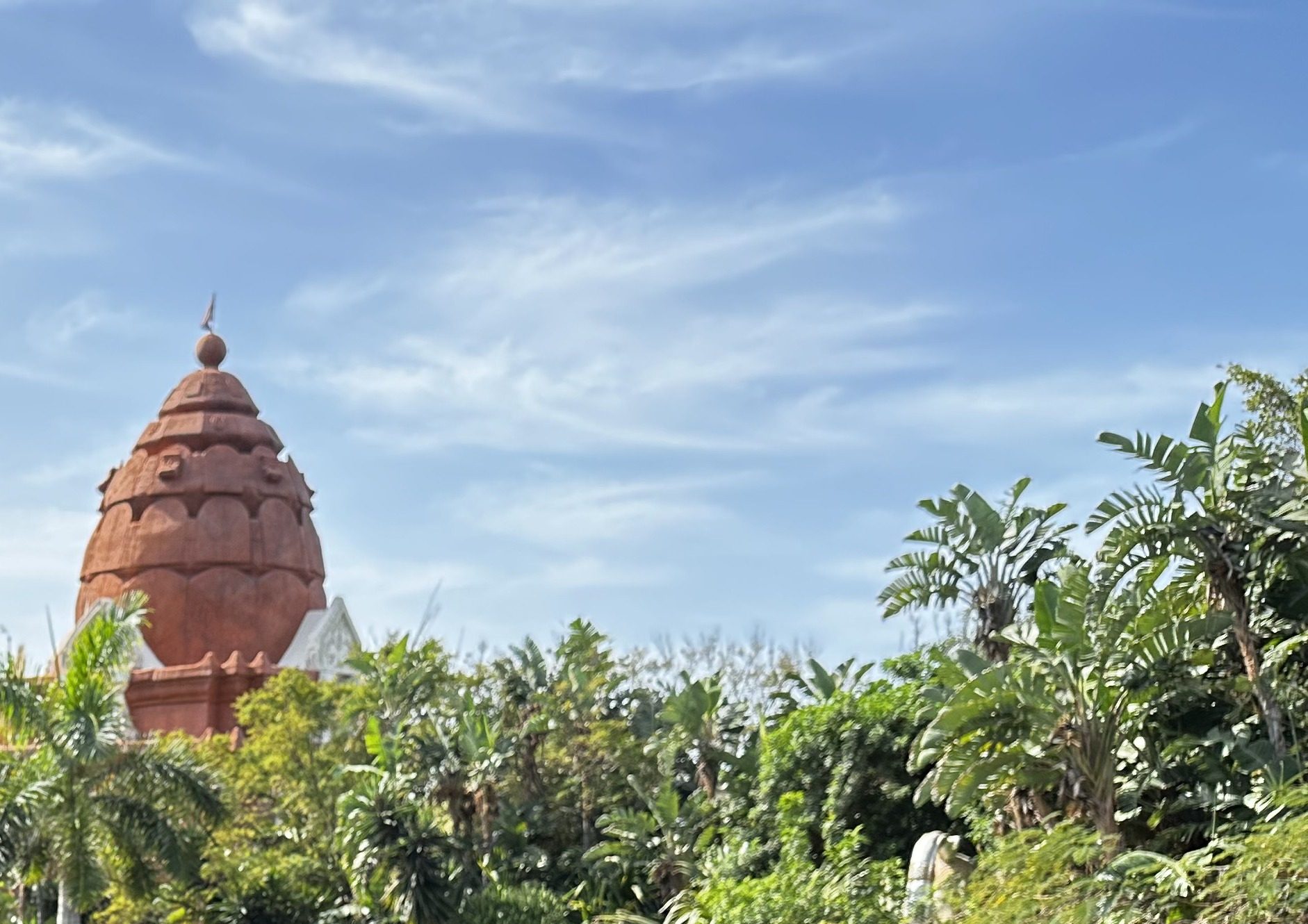
    A red Thai-style temple tower rising above palm trees at Siam Park, Tenerife
    Tenerife – Spain 🇪🇸

    Two big days out, three Februaries, one pick

    The temple towers at Siam Park, February 2024.

    This post contains affiliate links. We may earn a small commission, at no extra cost to you.

    We’ve spent three February half terms in Costa Adeje, and the same question comes up every time: Siam Park or Loro Parque? Siam is the water park about 15 minutes down the road. Loro Parque is the animal park on the north coast, in Puerto de la Cruz. We’ve been to Siam Park on all three trips, from 2023 to 2025, and to Loro Parque twice, in 2023 and 2025, each time with the kids. Here’s how they compare, and which one we’d pick if you only have time for one.

    The short answer

    If we had to choose one, it would be Siam, just because it’s so much easier to get to from Costa Adeje. They’re very different days out, though, and we’d happily do both again. We’d pick Siam for a good weather day, and save Loro Parque for a day that looks like it’s going to be poorer weather.

    What we did

    All three trips were a week at February half term, staying in Costa Adeje with a hire car, so we drove to both parks. We bought our tickets online, which was very easy. At Siam Park we didn’t buy fast passes. At Loro Parque we stayed most of the day, both times, and watched the orca session.

    Siam Park: the case for it

    The rides are a good mix of lazy river and adrenaline rides of varying types, and there are loads to choose from. There really is something for every age, from gentle slides to scary ones. There’s one ride when you end up going down a kind of slalom/toboggan run which is great fun. I do like a nice lazy river, and this was a good one!

    Thai-style wooden pavilions above a rock waterfall at Siam Park
    Thai-style pavilions above the waterfall at Siam Park.

    How long you need

    We’ve normally spent four to five hours there. You could stay longer or shorter, depending on how much time you have and whether you want to go on every ride. We cherry-picked rides. The queues weren’t that long when we were there, which I imagine is a relatively busy time.

    Fast passes, lockers and towels

    No fast passes – didn’t need them. We used lockers and took our own towels. This was easy enough. If you do want one, the Fast Pass Unlimited costs €99 on top of your ticket, and it doesn’t cover the Tower of Power or the Mai Thai River. The All Inclusive ticket (€165) adds unlimited fast passes, food and drink, a towel and a locker.

    Food and keeping warm

    The food was fine for the location: nothing special, nothing bad. In February the water was plenty warm enough. It can feel chilly out of the water, though, on days with cooler temperatures, overcast skies or wind.

    The Lost City play area at Siam Park, with slides and temple-style towers
    Lost City, Siam Park’s area for younger children.

    Loro Parque: the case for it

    We like Zoos and Wildlife parks wherever we go. The highlights for us were the gorillas, the orcas, and just the variety of animals and the lovely surroundings. The habitats and landscapes are varied and interesting. We were there for five hours or so, a full day really, and just grabbed a burger on the way round.

    Two gorillas in a grassy enclosure with fallen logs and trees at Loro Parque
    The gorillas at Loro Parque, 2023.

    There are moderate hills, which are fine unless you have mobility issues. There’s plenty of walking, but it’s pretty compact. The shows get busy, so it’s worth getting there early for a seat.

    A white tiger walking among rocks and plants at Loro Parque
    A white tiger at Loro Parque.

    The orcas

    We watched the orca session on both visits, and we enjoyed it. Keeping orcas in captivity divides opinion, so read up before you go and decide for yourself. The sessions currently run at 11:55 and 15:15 and last about 20 minutes.

    An orca leaping from the water during a session at Loro Parque
    The orca session at Loro Parque, 2023.

    Getting there

    Loro Parque is about 65 km from Costa Adeje by the west coast roads, or about 110 km by the motorway up the east coast. It’s a decent journey, but we were happy to do it to see the other side of the island, which is quite green, and Loro Parque, which is a great day out. The route up the east coast is more straightforward, basically on a motorway, but the traffic around the capital can get a little congested. The route back down the west coast can be a little rugged and twisty, with steep drops and cloudy or rainy conditions, but it’s pretty on a nice day. The north tends to have more overcast and rainy days, so look at the weather forecast, and don’t go if you don’t like the look of it.

    Flamingos on a lawn beneath palm trees at Loro Parque
    Flamingos at Loro Parque.

    Side by side

    Siam ParkLoro Parque
    From Costa AdejeAbout 15 minutesAn hour to an hour and a half
    Time we spent4 to 5 hours5 hours or so
    Day ticket€44 adult, €32 child (3-11)€44 adult, €32 child (3-11)
    Open in February10:00-17:009:30-17:30
    Parking€7 car park, or the street (we used the street)Paid car park
    Best forA good weather dayA day that looks like poorer weather
    Prices and opening times from siampark.net and loroparque.com, checked 9 Nov 2026. Under-3s go free at both.

    What to weigh up

    Both parks were nicely busy at half term, with families, couples, groups and teenagers. At busy times it might take a while at both to get a locker, your food and a seat, but we always managed. The car parks were full at both on occasions, which forced us to park outside. We soon sorted it, but it was irksome. At Siam, the big slides have weight limits (120 kg on most, and lower on a couple), and the Lost City area is there for younger children.

    Doing both: the Twin Ticket

    If you want to do both, the Twin Ticket covers one visit to each park. It costs €78 for an adult and €57 for a child (3-11) from the parks themselves, which saves €10 an adult and €7 a child on two day tickets. You have 15 days after your first visit to use the second park, so they can go on different days. You can also buy it through GetYourGuide. The price there is about the same, you can cancel up to 24 hours before, and you have 14 days to use the second park.

    Getting there without a car

    Siam Park runs free shuttle buses from Costa Adeje, Las Américas and Los Cristianos. Loro Parque has a paid bus from the south, arriving from 10:00 and leaving at 16:30. The free train in Puerto de la Cruz only runs within the town.

    Planning a stay?

    Check current prices and availability at GF Victoria, Iberostar Selection Anthelia and Vincci Selección La Plantación del Sur on Booking.com, the three Costa Adeje hotels we’ve stayed at.

    Affiliate links: if you book through one of these links, we may receive a commission at no extra cost to you.

    Which would we do again first?

    Yes, we’d do both again. But if it’s just one, it’s probably Siam. For more on the resort, the beaches and where we stayed, see Costa Adeje in February.
  • Can You Do Lake Tahoe and Yosemite in One Trip? Our Six Nights

    Can You Do Lake Tahoe and Yosemite in One Trip? Our Six Nights

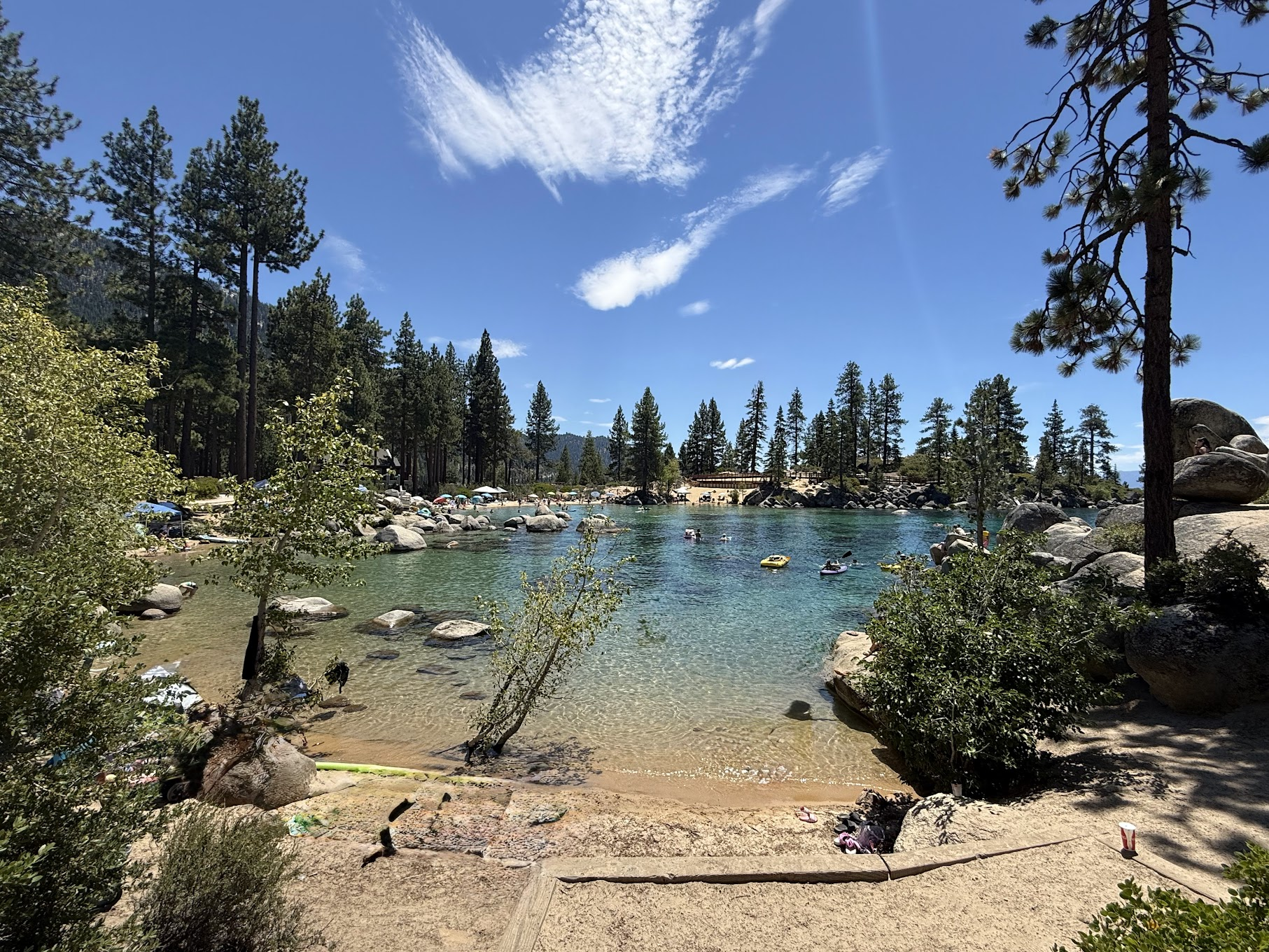
    Clear turquoise water and granite boulders at Sand Harbor, Lake Tahoe, with pine trees behind
    Lake Tahoe and Yosemite – USA 🇺🇸

    Similar in many ways; but can offer subtly different experiences.

    Sand Harbor on Lake Tahoe’s east shore.

    Affiliate links: if you book through one of these links, we may receive a commission at no extra cost to you.

    The short answer

    Yes. We spent four nights at Lake Tahoe and two in Yosemite Valley in July, with a travelling day between them.

    In many ways they are similar: lovely climate in summer, forest and water surroundings and able to either explore or chill.

    How our six nights worked

    WhenWhereHow we got aroundDriving time
    Day 1Las Vegas to South Lake TahoeFlight to Reno, then a hire carAbout 1½ hours from Reno airport
    Days 1 to 4Lake Tahoe, four nights at Edgewood TahoeOn foot, by Uber and by carShort drives around the lake
    Day 5Lake Tahoe to Yosemite ValleyBy car, via Jackson, Mariposa and Highway 140About 5½ hours before stops
    Days 5 and 6Yosemite Valley, two nights at The AhwahneeOn foot and on hire bikesVery little
    Day 7Yosemite to Los AngelesBy car to Fresno airport, then a flightAbout 2¾ hours to Fresno
    Driving times are from our route plans before the trip, not timed on the day.

    Four nights at Lake Tahoe

    We included Tahoe in our itinerary because we’d always wanted to visit, primarily because of the iconic lake and forest scenery but also because we were ready for some slower days after lots of travelling. Tahoe was perfect for easy trips out during the day, coupled with lots of relaxing on the beach, in the pool and in the grounds of the hotel.

    At Sand Harbor we swam in the beautiful little bay beside the shop and restaurant, perching on rocks in and around the water. After a walk at Taylor Creek, we drove to Emerald Bay and looked out from the high viewpoint beside the car park. The alpine scenery was just what we had hoped for.

    Turquoise shallows of Lake Tahoe seen between pine trees, with mountains across the lake
    The water at Lake Tahoe is this clear close to the shore.
    Emerald Bay on Lake Tahoe with Fannette Island, seen from a high viewpoint through pine trees
    Emerald Bay from the viewpoint beside the car park.

    We popped out in an evening for drinks and some food, and we particularly liked The Woods, a relaxed sports bar that suited us well as a family. If there was one slight downside, it was that South Lake Tahoe didn’t quite have the distinct, walkable resort centre we’d perhaps imagined. There were plenty of restaurants, bars and things to do, but they felt a little more spread out.

    It was a beautiful place to relax for a few days, and one where we could happily have stayed longer.

    Pine trees silhouetted against a pink and orange sunset over Lake Tahoe
    Sunset from the lawn at Edgewood.

    The drive between them

    There are two main ways to drive between Lake Tahoe and Yosemite Valley. The quicker one runs down the eastern side of the Sierra Nevada and enters the park over Tioga Pass on Highway 120. Tioga Road closes for the winter. Between 1933 and 2022 it opened on average around 28 May and closed around 3 November, so outside summer the western route is the way in. Our route planner showed the quicker options at about 4 to 4¾ hours, against about 5½ for the route we took.

    Our concern wasn’t winding roads. We’re generally fine with those. What we were less comfortable with was spending long periods on roads with steep roadside drops and little between the car and the edge. So instead, we took a much longer route around the western side of the Sierra Nevada:

    South Lake Tahoe → Jackson → Mariposa → Highway 140 → Yosemite Valley

    We only had very brief stops because we wanted to get to Yosemite in decent time. There were loads of places to stop at regular intervals. We could have stopped at fast food places, services and more bespoke diners along the way if we had wanted to. Our main stop was in a small town near Jackson for a quick sandwich at a petrol station. The final part of the journey towards Yosemite was particularly beautiful.

    This is simply the route we chose and how we found it. We’ve written up the whole drive in Lake Tahoe to Yosemite: The Longer Route We Took via Jackson and Mariposa.

    Two nights in Yosemite Valley

    Two nights was all we could allocate to Yosemite to fit it into our wider itinerary. We could easily have stayed twice as long but 2 nights certainly wasn’t a waste of time. We got to see a lot of the valley properly on the bikes so we felt we got a proper look at it.

    Granite cliffs rising above pine trees and a meadow path in Yosemite Valley
    Granite cliffs above the floor of Yosemite Valley.

    We visited El Capitan Meadow at dusk on our first evening. The next day we hired bikes in Yosemite Village, emerging from woods beneath sunlit cliffs and stopping for a refreshing river swim at Cathedral Beach.

    Shallow clear river with a sandy bank and a granite cliff behind, Yosemite Valley
    Cathedral Beach on the Merced River.

    We explored on foot and on single-gear hire bikes. Rougher sections were heavy going; we felt a mountain bike would have handled them more easily.

    Two cyclists on a dirt path through a meadow below El Capitan, Yosemite
    Cycling the valley floor below El Capitan.
    Golden meadow in Yosemite Valley with Half Dome and granite walls on the skyline
    One of the lovely views we had riding round the valley.

    Once we’d arrived at The Ahwahnee, we barely needed the car. We could walk, cycle or simply head out from the hotel and immediately feel as though we were in the middle of Yosemite.

    Yosemite was also relaxing, particularly in an evening sitting outside the Ahwahnee surrounded by the fabulous scenery. But Yosemite felt more like a place it would be a real shame not to explore. There were folks there who were probably camping and just enjoying the river every day but we didn’t have time.

    Tahoe or Yosemite, if you can only fit in one

    Tahoe is the better choice for slower days, and Yosemite for days spent out exploring.

    Tahoe has more in the evenings, being a bigger town, and more resorts like Edgewood where you can spend a day with your feet up. Equally there were plenty of activities you could keep busy with at Tahoe.

    Yosemite feels more suitable for the outward bound and it just has to be explored due to its variety of spectacular views and settings. To us, it would be a waste just sitting all day in Yosemite.

    Practical points

    • Breaking up the longer distances with flights from Las Vegas to Reno and Fresno to Los Angeles was something we would do again.
    • We picked up a hire car at Reno airport and dropped it off at Fresno airport, so one hire covered Tahoe, the drive and Yosemite.
    • For Sand Harbor, we caught the East Shore Express at Tunnel Creek. For vehicle entry, Sand Harbor requires day-use reservations from 15 May to 30 September.
    • Cycling is permitted on roads and paved bike paths.
    • Yosemite charges US$35 per private car for seven days, plus US$100 for each non-US visitor aged 16 or over.
    • There was no entry reservation for Yosemite in summer 2026, but the rules have changed from year to year, so check the park’s website before you go.
    • July averages are about 27°C by day and 6°C at night in South Lake Tahoe, and 32°C and 14°C in Yosemite Valley.
    Where we stayed

    One thing the trip reinforced for us was that spending more on a hotel makes most sense when it changes the experience of the destination. Edgewood Tahoe ended up being our favourite hotel of the entire USA trip. We chose The Ahwahnee because we only had a short time in Yosemite and wanted to stay right in the heart of the valley.

    Read our full reviews: Edgewood Tahoe Review: Was It Worth It? and The Ahwahnee Review: Is Yosemite’s Historic Hotel Worth It?.

    Planning a stay?

    Check current prices and availability at Edgewood Tahoe and The Ahwahnee on Booking.com.

    Affiliate links: if you book through one of these links, we may receive a commission at no extra cost to you.

    Would we do it the same way again?

    Yes. Four nights at Lake Tahoe gave us the slower days we were ready for, and two nights in Yosemite Valley were enough to see a good deal of it by bike. Flying into Reno and out of Fresno kept the long driving to the one day between them.

    More from this trip

    Planning a similar trip? This trip took a lot of research and planning. About a week of evenings, 30 to 40 hours. Our 36-page USA Road Trip Pack puts all that planning in one place, to help you plan your trip in a fraction of the time: every base and how many nights, which legs we drove and which we flew, what to book first, where we ate and a printable checklist. £14.99 launch price until 31 January (usually £19.99).

  • Is Interlaken a Good Base? What We Reached in Four Days by Train

    Is Interlaken a Good Base? What We Reached in Four Days by Train

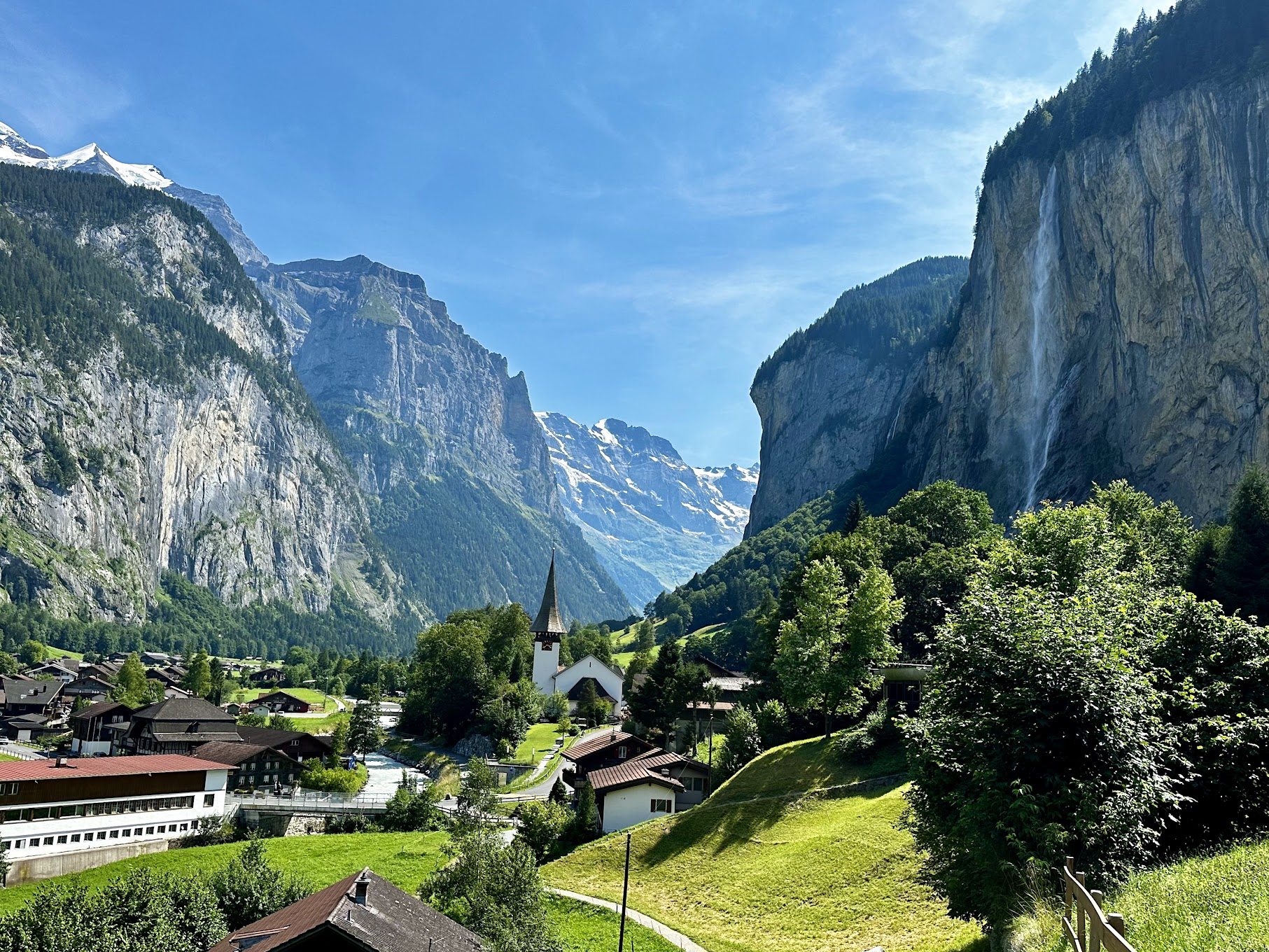
    Lauterbrunnen church beneath steep valley cliffs and Staubbach Falls.
    Interlaken – Switzerland 🇨🇭

    The best hub for seeing a bit of everything.

    Lauterbrunnen church and Staubbach Falls.

    Some links in this post are affiliate links. We may earn a small commission if you book, at no extra cost to you. More at the end.

    The short answer

    Yes, if you want to see a bit of everything. We spent four nights in Interlaken in July and reached Lauterbrunnen, Wengen, Grindelwald, Jungfraujoch, Lake Thun and Thun by train and boat, without ever needing a car.

    We did a lot of research before booking. We drew up a shortlist of the things we wanted to do, and on balance Interlaken was the best hub for all of them. The other places seemed to be spokes on the wheel rather than a hub.

    If all you want is to hike and ski high, some of the mountain villages would be better.

    What we reached from Interlaken

    When and whereHow we got thereJourney time (researched)
    Arrival: a lido on Lake BrienzWalked from the hotelWalking distance
    Day 2: Lauterbrunnen, cycling the valley, Trümmelbach Falls, then WengenTrain, hired bikes, then the train up to WengenLauterbrunnen 25 min; Wengen 11 to 14 min more
    Day 3: Grindelwald and JungfraujochTrain to Grindelwald, then the Eiger ExpressGrindelwald 35 min; Jungfraujoch about 1.5 hrs
    Day 4: Lake Thun and Thun old townPaddle steamer from Interlaken West, train backAbout 2 hrs by boat; about 35 min back by train
    Leaving: GenevaTrainAbout 2.5 to 3 hrs, one change
    Journey times are from the SBB, BLS and Trainline timetables, checked in October 2026, and will vary by connection.
    Aletsch Glacier stretching through the high Alps at Jungfraujoch.
    The Aletsch Glacier from Jungfraujoch, about 1.5 hours from Interlaken by train.

    Why it worked as a base for us

    1. The best hub for everything on our list

    From Interlaken we could reach the valleys, the mountains and both lakes. Staying in Lauterbrunnen or Grindelwald would have put one of those on the doorstep and made the rest a longer trip.

    A sheer rock wall above a green meadow and wooden barn in the Lauterbrunnen valley.
    On the bike ride up the valley. Lauterbrunnen is 25 minutes from Interlaken Ost by train.
    Walkways and rushing water inside the gorge at Trümmelbach Falls.
    Trümmelbach Falls, a short ride up the valley from Lauterbrunnen.

    2. We never needed a car

    The trains were superb and seemed to run like clockwork. There was never a point where we thought a hire car would have improved the Swiss half. We used a Swiss Travel Pass, and none of the journeys felt long.

    3. Lakes as well as mountains

    On our first afternoon we walked from the hotel to a lido on Lake Brienz for a swim. On our last full day we took the paddle steamer across Lake Thun to Thun. After the valleys and mountains, the boat trip was a welcome change.

    Brienz Lido beside Lake Brienz, with the outdoor pool and mountains beyond.
    The lido on Lake Brienz, within walking distance of the hotel.
    Turquoise Lake Thun with the pyramid-shaped Niesen mountain on the far shore.
    Lake Thun from the paddle steamer, with the Niesen on the left.
    Oberhofen Castle and its lakeside tower on the shore of Lake Thun.
    Oberhofen Castle, one of the stops on the boat from Interlaken West to Thun.

    4. A bigger town for the evenings

    Interlaken is the bigger town, so we felt it would give us more variety in the evenings. We could spend the day in the mountains or on the lakes, then come back to plenty of restaurants and bars.

    Thun Castle above the old town square, with shuttered buildings and a Bern flag.
    The square below Thun Castle, where we stopped for lunch.

    5. Easy in and out

    We arrived by train from Zurich airport and left by train for Geneva, where we picked up a hire car for Lake Annecy. Both journeys were easier from Interlaken, and our hotel was five minutes’ walk from Interlaken Ost.

    Hotel Interlaken beside the Japanese garden.
    Hotel Interlaken, a five-minute walk from Interlaken Ost.

    6. A bit of everything

    We were less bothered about going up every mountain and more about seeing a bit of everything. On the day we went to Grindelwald, the boys and their mum went up to Jungfraujoch on the Eiger Express, while one of us stayed in Grindelwald and had a beer in the sun.

    Alpine panorama above Grindelwald, with green meadows, chalets and mountain peaks.
    Grindelwald, 35 minutes from Interlaken by train.

    What to weigh up

    Other travellers raise three points against Interlaken: every mountain day starts with a train back up the valleys, the town is busier, and it has less of an Alpine village feel than Wengen or Mürren.

    All three are undoubtedly true. It is busier and we knew it would be, but that fitted with the other things we liked about Interlaken. If you want to do Thun, Brienz, Lauterbrunnen, Grindelwald and Wengen and get to and from Zurich and Geneva, the other places would not be as convenient.

    Paragliders above the Höhematte in Interlaken, with the Jungfrau beyond.
    Paragliders over the Höhematte, a short walk from the hotel.

    When another base might suit you better

    We didn’t stay in the villages, so this comes from guides and other travellers rather than our trip. The Jungfrau Region tourism site has a page for each one.

    • Grindelwald: the village most guides suggest for a first visit. It’s bigger, with more hotels and restaurants, and the Eiger Express is close by.
    • Lauterbrunnen: quieter, at the foot of the valley we cycled, with fewer and simpler hotels.
    • Wengen: no cars, and a short train ride up from Lauterbrunnen.
    • Mürren: no cars and big mountain views, but fewer restaurants and shops.

    Where we stayed

    We stayed four nights at Hotel Interlaken. It was central, neat, tidy and cosy, with an excellent location for getting around. We would happily stay there again. Read our full Hotel Interlaken review.

    Planning a stay in Interlaken?

    Check current prices and availability at Hotel Interlaken on Booking.com

    Affiliate link: if you book through this link, we may receive a commission at no extra cost to you.

    More from this trip

  • Is Radiator Springs Real? The Route 66 Places Behind Cars

    Is Radiator Springs Real? The Route 66 Places Behind Cars

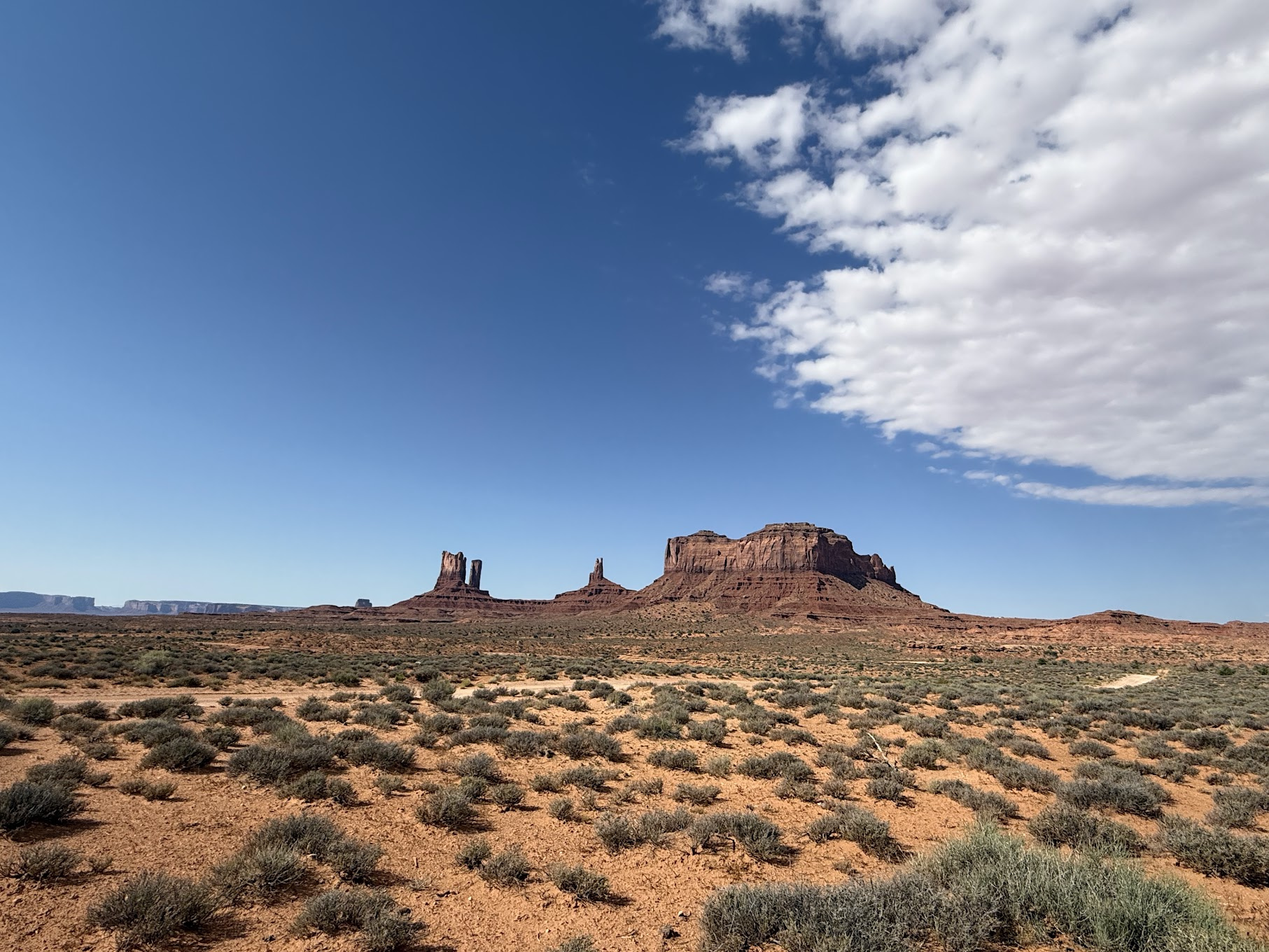
    Isolated Monument Valley formations beyond open desert scrub, with clouds in the upper-right sky.
    Monument Valley – USA 🇺🇸

    Monument Valley – inspired Ornament Valley in Cars

    Monument Valley, on the Arizona–Utah border.

    Radiator Springs isn’t a real town. But one of the inspirations for our American road trip was to find somewhere in the Southwest that felt like it.

    Why we wanted to find Radiator Springs

    One of the slightly unusual inspirations behind our 2026 USA road trip was a Pixar film. We have watched Cars plenty of times over the years, and somewhere along the way we started wondering whether it was possible to visit somewhere that genuinely felt like Radiator Springs.

    We knew the town itself was fictional. We weren’t expecting Flo’s V8 Café, Mater’s yard and the Cozy Cone Motel to be sitting around a crossroads waiting for us. What we wanted was the feeling behind them: huge red rocks, open desert and roads disappearing towards distant formations, with a small roadside community somewhere among it all.

    The town mattered as much as the scenery. We imagined a main street, a few shops and diners, old signs, perhaps some neon, and the sense that the road was part of the place. As the trip unfolded, we didn’t find all of that in one stop. We kept recognising different bits of it.

    Pixar’s account of making Cars helps explain why. Its team travelled Route 66, gathering photographs and footage, and imagined Radiator Springs in the high desert somewhere between Gallup, New Mexico, and Kingman, Arizona. The film grew out of the character of the road and its communities.

    Why now? Two anniversaries in 2026

    In 2026, Cars turned 20, and Disney announced a cinema re-release from 4 September. It’s also Route 66’s 100th anniversary. Having driven part of that road ourselves this summer, it seemed the right moment to come back to the question that helped start our trip.

    Sedona was where it first started to feel real

    Of all the places we visited, Sedona was the first to make the landscape we had imagined feel convincing. Before the trip, it had seemed a good candidate simply because of its red rocks. As far as we can find, Sedona isn’t a documented Cars inspiration, and nor are several of the stops below. They’re here because of how they felt to us. Where there is a documented link, we say so.

    But as those formations appeared, the resemblance felt obvious to us: distinctive shapes rising straight out of the landscape, with the colour and presence we remembered from Ornament Valley.

    Wide view across Sedona to layered red-rock formations beneath sweeping clouds.

    Parts of the town supplied the other half of what we had pictured: low-rise shops and businesses along a main road, with those enormous rocks behind them. Sedona is much bigger and busier than Radiator Springs, but there were moments when we could imagine a fictional town like it sitting in this landscape.

    Homes and trees sit beneath red-rock spires and buttes in Sedona.

    The Flagstaff–Sedona road reminded us of Lightning and Sally’s drive

    The approach had already set the mood. The drive down from Flagstaff towards Sedona was the road that most reminded us of Lightning McQueen and Sally’s countryside drive away from Radiator Springs.

    The landscape just changed as we dropped down into the valley, and it was stunning: steep red-rock sides with outcrops on top, vibrant green vegetation sprawled across them, and the road winding through. It was a captivating end to a long drive, and the closest we came to that scene from the film on our own trip.

    We stayed at Amara, tucked below the main road beside Oak Creek. We had drinks there before heading out every night, looking across the creek to the red rocks, and it gave us the best service of all seven hotels on the trip. There’s more on that stay in our three nights in Sedona post.

    Sometimes the desert drive was enough

    Other stretches reminded us of the journey rather than a particular location. On those long Arizona roads, with desert spreading away on either side and an enormous horizon ahead, it was difficult not to think of Mack heading west in the early travel sequence, with Life Is a Highway playing.

    We were finally travelling through the sort of American landscape that Cars had made familiar years before we saw it ourselves.

    Kingman: a diner, an old police car and a very Cars-like moment

    Earlier on the Route 66 part of the journey, around Kingman, it was the roadside details that caught our attention. At Mr D’z Route 66 Diner, the colourful building with a vintage police car parked outside looked almost too perfect. We ate there too. Inside, it looked and felt just like you’d expect a US roadside diner to, with bright colours and a bit of art deco, and the food was good American diner fare. The boys thought the diner and the police car were cool.

    A bright old-fashioned diner already fitted our imagined Radiator Springs. Add an old police car and it was hard not to think of Flo’s and Sheriff. It was just one of those moments when real life looked like a scene from the film.

    Vintage police car outside the turquoise and pink Mr D’z Route 66 Diner in Kingman.

    Hackberry really does have a Curios connection

    Hackberry General Store had the same effect on us, but this time there was a documented reason. Old petrol pumps, weathered signs, memorabilia and vintage vehicles surrounded the little roadside store. Looking at it, we immediately thought of Lizzie and Radiator Springs Curios.

    Hackberry General Store behind vintage petrol pumps, Route 66 signs and outdoor chairs.

    The Historic Route 66 Association of Arizona identifies Hackberry General Store as an inspiration for Radiator Springs Curios.

    Seligman has the story, but we saw too little of it

    Seligman belongs in any discussion of the places behind Radiator Springs. The Historic Route 66 Association of Arizona names it as one of the town’s real-life inspirations. Its wider history matters too: Angel Delgadillo’s work to revive Route 66 is closely tied to Seligman, and the fortunes of towns bypassed by the interstate echo the history Sally tells Lightning in the film.

    Our own experience was much more limited. The weather was awful, we didn’t spend long there, and we saw too little to pretend we had explored it properly.

    US-163 felt like the road into Ornament Valley

    Later, around Monument Valley, the roads and the scenery started coming together. US-163, including the famous view associated with Forrest Gump Road, looked to us like the sort of approach you ought to drive if Radiator Springs existed somewhere beyond the horizon. We stopped at Forrest Gump Point for that view, with “Life Is a Highway” playing in the car, which we cover in our USA road-trip article.

    A highway curves through open desert towards Monument Valley’s isolated rock formations.
    A still from our drive towards Monument Valley.

    The distant formations gave the journey a destination even when there was no town in sight. The road and the landscape together made the comparison for us.

    Arriving at Monument Valley

    Our Welcome to Utah photograph captures that arrival: a familiar roadside sign, with Monument Valley already there behind it. By this stage, the search had moved well beyond finding the right diner or main street.

    Welcome to Utah sign with Monument Valley formations across the desert behind it.

    Monument Valley made the whole thing click

    The isolated formations and the sheer size of the place brought Ornament Valley straight to mind. Sedona had the red-rock colour; Monument Valley had the scale. To our eyes, Ornament Valley looks like a mix of the two.

    Close-up Monument Valley formations with a road running across the foreground.

    There is a documented connection here. In KSL’s August 2026 interview with Pixar production designer Bob Pauley, who took part in the research trips, the report explains that Monument Valley inspired the name Ornament Valley. Pauley also described the wider influence of Utah’s scenery on the film.

    Three isolated red-rock buttes rise above Monument Valley’s open desert, with a winding dirt road below.

    Where we found our pieces of Radiator Springs

    PlaceDocumented Cars linkWhat it felt like to us
    SedonaNone documentedThe red-rock setting we had imagined.
    Flagstaff → SedonaNone documentedLightning and Sally’s countryside drive.
    Kingman / Mr D’zNone documentedColourful diner and vintage Americana.
    HackberryCurios inspiration, documented by Arizona’s Route 66 Association.Lizzie’s shop, pumps and roadside memorabilia.
    SeligmanNamed among Radiator Springs’ inspirations; important Route 66 history.A place we saw too little of in poor weather.
    Monument ValleyInspired Ornament Valley’s name, reported in the Pauley interview.The scale and isolated formations that made it click.
    US-163None documentedThe approach into our imagined Ornament Valley.

    A few questions about visiting the real-world inspirations

    Is Radiator Springs real?

    No. It’s a fictional Route 66 town, which Pixar imagined somewhere between Gallup and Kingman. No single real town has everything from the film.

    Is Seligman the real Radiator Springs?

    No. It’s one of the documented inspirations, but the film borrowed from places all along the route.

    Can you visit places that inspired Cars?

    Yes. Hackberry General Store and Seligman are real Route 66 stops, and Monument Valley inspired Ornament Valley’s name.

    Would we include this route in a Southwest road trip?

    Definitely. Looking for Radiator Springs was one of the things that inspired ours, and the search became part of the pleasure of travelling. Our full USA road-trip article shows how the stops fitted together. We also included a short Grand Canyon visit between Sedona and Monument Valley; these are stages of a wider trip, rather than one compact Cars attraction.

    Planning a similar trip? This trip took a lot of research and planning. About a week of evenings, 30 to 40 hours. Our 36-page USA Road Trip Pack puts all that planning in one place, to help you plan your trip in a fraction of the time: every base and how many nights, which legs we drove and which we flew, what to book first, where we ate and a printable checklist. £14.99 launch price until 31 January (usually £19.99).

    So did we find Radiator Springs?

    No, we didn’t find it. But travelling through places that looked and felt like Radiator Springs brought us about as close as we could imagine to being there, inside the film. Knowing that some of those places had actually helped inspire Cars made it feel even more as though we were retracing the story.

    Life Is a Highway

    “Life Is a Highway” is the song we associate with those long drives in Cars. During our week exploring Arizona and Utah, we spent whole days on the road ourselves. A film that had been such a big part of our boys growing up became part of our own lives for a while, as we travelled through that extraordinary red-rock landscape with Lightning McQueen and his friends in mind.

    And then, when we reached Los Angeles, our hotel put on a movie night by the pool. The film? Cars. After everything we had just seen, it felt like fate had arranged one last scene for us.

  • Is Two Hours at the Grand Canyon Enough? Our Short South Rim Visit

    Is Two Hours at the Grand Canyon Enough? Our Short South Rim Visit

    If you’re planning a road trip through Arizona, you might find yourself asking a slightly uncomfortable question:

    Is two hours at the Grand Canyon actually enough?

    For us, two hours turned out to be enough for a worthwhile first visit.

    We visited the South Rim as part of our wider USA road trip, travelling from Sedona towards Monument Valley. We had a fairly tight day planned because we wanted to reach Monument Valley by dusk, so we knew from the outset that our Grand Canyon visit would be short.

    We ended up spending roughly two hours there.

    The approach already felt dramatic

    Part of what made the visit memorable happened before we even arrived.

    The road towards the canyon seemed to stretch on and on, long and straight, which gradually built the feeling that we were heading towards something on an enormous scale.

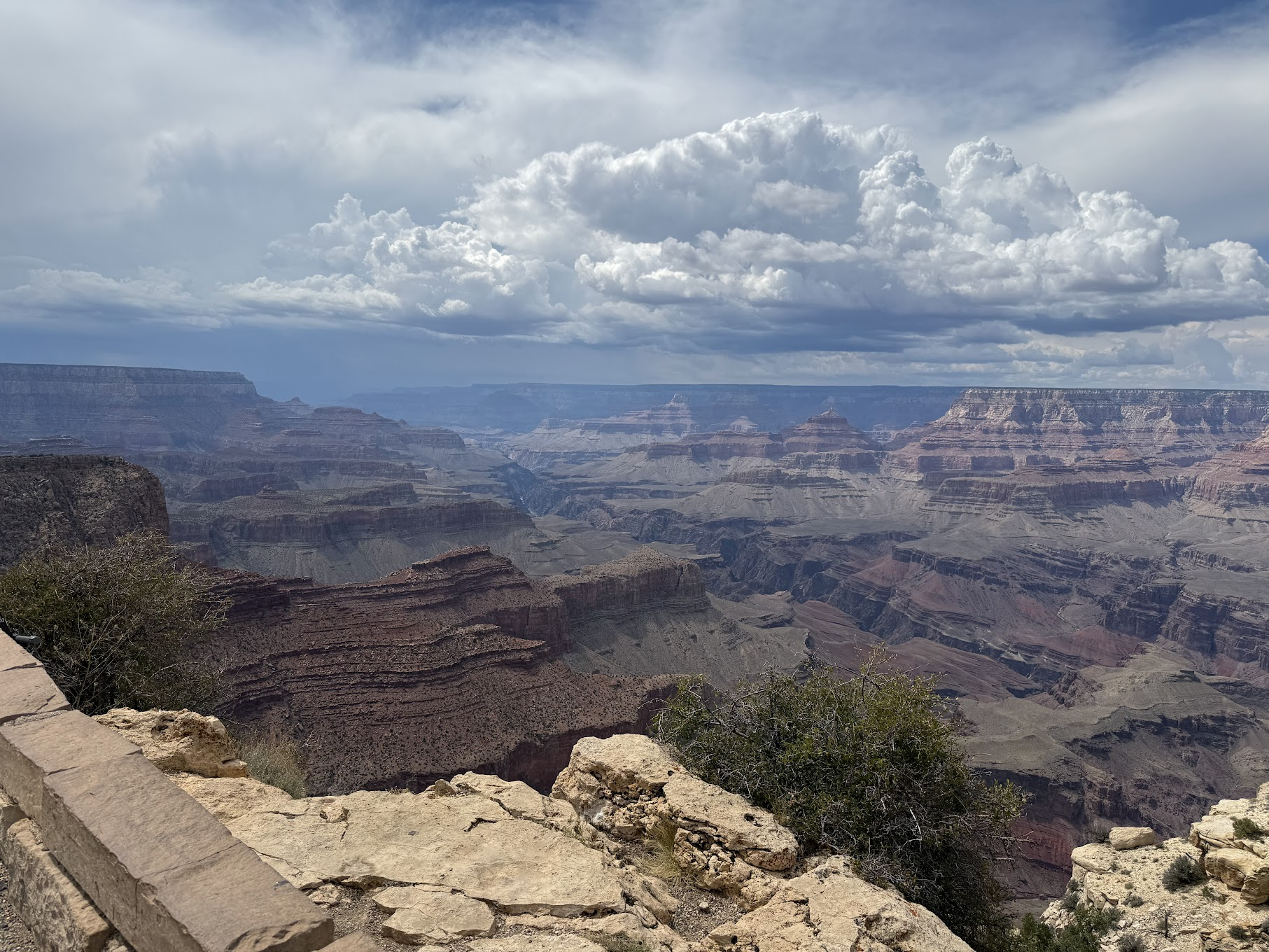
    We also hit a heavy downpour on the approach, which added another layer of drama to the journey.

    By the time we reached the South Rim, it already felt as though the drive itself had been building towards something significant.

    That first view

    The first view of the canyon was probably the most memorable part of the whole stop.

    From the visitor centre, the walk towards the rim rises slightly, so you don’t really see the canyon opening up in front of you from a long way off.

    It almost sneaks up on you. Then suddenly it’s there.

    That made the first view feel even more dramatic. The scale is genuinely awe-inspiring, and it was one of those moments where photographs simply don’t come close to seeing it with your own eyes.

    What we managed to do in two hours

    We actually fitted more into the two hours than simply stopping at viewpoints.

    Visitors taking in the view from a Grand Canyon South Rim viewpoint.

    We stopped at several viewpoints along the South Rim. What made the stops more interesting was that they weren’t all just different places to look at the same view. Each had subtly different scenery and, in some cases, its own bit of history.

    At Grandview Point, we learned about the Grand View Hotel, which once stood beside the viewpoint. Pete and Martha Berry opened the hotel in 1897, and it was eventually torn down in 1929. At Moran Point, an interpretive marker explained the story of the first Spanish expedition to encounter the Grand Canyon. Members of that expedition attempted to find a way down towards the Colorado River but eventually had to give up. The marker identifies where we read the story; it does not establish Moran Point as the precise place where the expedition first encountered the canyon.

    We moved between South Rim viewpoints, taking in several different perspectives of the canyon rather than attempting a longer walk or trying to see everything. For a short visit, that worked well.

    Why two hours worked for us

    A few practical things helped.

    When we visited, there was ample parking and the queues to enter the park weren’t bad at all, so we didn’t lose much of our limited time waiting around.

    That matters. If we’d spent a large part of the visit queuing to get in or searching for somewhere to park, two hours could have felt completely different.

    Instead, things ran smoothly enough that we were able to focus on the canyon itself.

    Perhaps the best indication that it didn’t feel excessively rushed is that we still had time for a sandwich, a look around the visitor centre and a trip to the gift shop for souvenirs.

    We certainly weren’t exploring the Grand Canyon in depth, but neither did we feel as though we simply jumped out of the car, took a photograph and left.

    What two hours is not enough for

    • hiking into the canyon
    • spending time on longer trails
    • exploring lots of different parts of the South Rim
    • watching sunrise or sunset
    • spending a long time at museums or visitor centres
    • taking a more relaxed approach to the whole day

    If the Grand Canyon is one of the main reasons for your trip, we’d absolutely allow much longer.

    Our visit worked because it was one stop within a bigger road trip rather than the main destination of the day.

    A wide panorama across the Grand Canyon beneath dramatic summer clouds.

    Would we recommend a two-hour visit?

    If two hours is genuinely all you have, we wouldn’t skip the Grand Canyon.

    You can still get a memorable first look and visit several viewpoints, but we’d think of it as a taster rather than a full Grand Canyon experience.

    How we fitted it into our road trip

    We left Sedona after breakfast, drove to the South Rim, spent around two hours there, and then continued towards Monument Valley.

    The timing mattered because we wanted to reach Monument Valley by dusk.

    That made the day fairly ambitious, but it worked for us.

    One thing to budget for if you live outside the US: since 1 January 2026, visitors aged 16 and over who aren’t US residents pay an extra $100 each on top of the normal entry fee at the Grand Canyon. If you’re visiting other big national parks on the same trip, the $250 non-resident annual pass may work out cheaper. Prices change, so check the National Park Service website before you go.

    Would we do it the same way again?

    For the same road trip and the same amount of time available, we’d probably do it the same way again.

    If we had an extra day, though, we’d happily spend much longer there.

    Part of our wider USA road trip

    Our Grand Canyon stop formed part of an 18-night family road trip through Nevada, Arizona, Utah and California, including Las Vegas, Route 66, Sedona, Monument Valley, Lake Tahoe, Yosemite and Los Angeles.

    For the full itinerary, see Our 18-Night USA Road Trip Itinerary.

    Planning a similar trip? This trip took a lot of research and planning. About a week of evenings, 30 to 40 hours. Our 36-page USA Road Trip Pack puts all that planning in one place, to help you plan your trip in a fraction of the time: every base and how many nights, which legs we drove and which we flew, what to book first, where we ate and a printable checklist. £14.99 launch price until 31 January (usually £19.99).